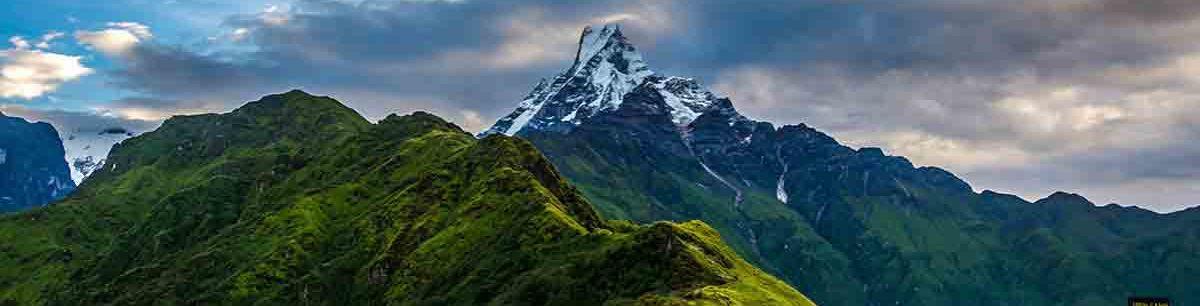
Manaslu Circuit Trek Cost and Difficulty

Rating: 5 out of 5.

For adventure seekers, the Manaslu Circuit Trek is the greatest option. This is a hike that is moderately tough. The difficulty of the Manaslu Circuit Trek is mostly determined by the trekker’s physical condition. This journey allows you to cross through multiple rivers and waterfalls, as well as see beautiful mountain vistas. The Manaslu Circuit is a lengthier journey than some of Nepal’s other expeditions. In 13 to 17 days, the Manaslu may be conquered. The Manaslu Circuit is quite unique. Along the steep-sided Budhi Gandaki river, the hike follows an ancient salt-trading route. While climbing through the Manaslu region, ten peaks taller than 6,500 meters (21,300 feet) are visible, including summits taller than 7,000 meters (23,000 feet).

Manaslu Circuit Trek Difficulty

The Manaslu Circuit Trek is an excellent option for anyone looking to explore the remote region. Geographically, it is located in the lonely Himalayan foothills on the Tibetan border. This trekking area is in Nepal’s protected and restricted regions. As a result, you’ll learn about the well-preserved natural environment as well as the indigenous tribes’ culture. When it comes to difficulty, the grade is severe. As a result, it is somewhat tough for novice trekkers. However, any rookie lever trekker may do it if they are well prepared in ahead; if they are adequately prepared, they will quickly reach their target. You should be aware of its complexity, but rest assured that no technical climbing abilities are required for this trek.

Things that Determine the Difficulty of the Manaslu Circuit Trek

Allow us to go through a few factors that determine the difficulty of the Manaslu Circuit Trek.

  1. The Trek’s Distance:The Manaslu Circuit Trek is located in Gorkha district, in the northern Himalayan range. The overall distance is around 177 kilometers. On a typical 19-day tour, you’ll be walking for 10-12 days, covering an average distance of 15-20 kilometers each day, which can be exhausting for you. The trek becomes challenging after the first few days because the Budhi Gandaki Gorge is incredibly steep. You’ll travel along winding paths and over suspension bridges that span the Budhi Gandaki River. At 5,213 meters above sea level, crossing the Larkya La Pass is a difficult task. Trekking via the uneven terrain and rocky trail also requires stamina and endurance.
  2. Weather of Manaslu Region: The weather can make a major impact in the difficulty of your Manaslu Circuit trek. On your 19-day trekking trip, you may encounter heavy rain, chilly nights, scorching sun, and biting winds. The days are usually warm and dry, and the nights are usually mild. Make sure to bring warm clothing for the evening and night, as well as a good sleeping bag. Layering is crucial when it comes to clothing. The autumn season is the best time to walk the Manaslu Circuit because of the pleasant weather. The weather is excellent, with consistent temperatures, and the magnificent mountain vistas are breathtaking!!! As a result, you should aim for the spring and fall seasons, when the weather should not be too bad.
  3. Altitude Sickness: Altitude sickness, sometimes known as acute mountain sickness, makes hiking difficult, particularly at high altitudes. The altitude of the Manaslu Trek varies greatly. As a result, one of the most challenging challenges you may experience throughout the Manaslu Circuit Trek is adjusting to high altitudes. You should take the following precautions to avoid altitude sickness: Slowly climb, bring plenty of energy bars, plenty of nutrients and carbohydrates, stay hydrated, and avoid alcoholic and cigarette products. Don’t take sleeping pills because they exacerbate altitude sickness.

Manaslu Circuit Trek Cost

Because the majority of international visitors to Nepal arrive in Kathmandu, they are more likely to hike in areas other than Annapurna or Manaslu. To do so, one must travel to Pokhara. By default, all trekking companies provide transportation from Kathmandu to Pokhara. Some travel by bus, while others travel by plane. Most itineraries include hotel accommodations in Pokhara as well as transportation from Pokhara to Ghorepani. This is where some of the expenses are incurred. Depending on the provider you choose, even the same trekking package can cost differently. In Kathmandu, for example, there are five-star hotels that are far beyond the average tourist level. They go from Kathmandu to Sotikhola and Dharapani using either a private jeep or a local bus, depending on the client’s budget. In this hiking trail, many trekkers stay in local tea houses, while some prefer to tent for better service and unique experiences. As a result, we are unable to provide a precise price for the Manaslu circuit trekking. The Things that may have an impact on the same product with a different price are: The size of your group, the number of persons in your group, the duration of the journey, In Kathmandu, request a certain night and hotel category. Request a trekking mode (camping or tea house trekking), Is it possible to request the number of trekking guides and porters? Transportation modes (either private jeep or local bus), In the mountains, follow the trekking route and duration.

Even though you are not required to pay an entrance charge, you must still pay for permits. Hiking in the Nepal Himalayas is impossible without it. Three types of permits are required for the Manaslu Circuit:

The cost of a Manaslu Trek permit is determined on the month and number of days you plan to spend in the region. To trek in the Manaslu region, you’ll need one of three types of permits from the Nepalese government.

Manaslu Restricted Permit:

From September to November, the Manaslu trek permit costs USD 70.00 for the first seven days and USD 10.00 for each extra day. From December to August, a Manaslu trek permit costs USD 50.00 for the first 7 days and USD 7.00 for each additional day.

The Manaslu Conservation Area Permit (MCAP)

costs 200 NPR per person for SAARC nationals and 2,000 NPR per person for other nationals.

You will also require an Annapurna Conservation Area Permit (ACAP) because you will be entering the Annapurna Conservation Area.

Your trekking company will take care of all permissions. The Manaslu Circuit Trip is a more expensive trek in Nepal due to its typical time and exclusivity. Per person, prices range from 1000 USD to 1900 USD (or 900 EUR to 1800 EUR).

Feel Free To Contact Us.

Dhaulagiri Circuit Trek: Complete Guideline

Rating: 5 out of 5.

Dhaulagiri Circuit Trek is an exciting and adventurous expedition that takes you in a circle around the world’s seventh highest summit, Dhaulagiri Himal (8,167 meters/26,780 ft). The Dhaulagiri Circuit Trip, also known as the Dhaulagiri Round Trek or the Dhaulagiri Pass, is a classic adventure for those who have previous expertise with high altitude hiking and is a hard yet equally scenic off-the-beaten-path trek in Nepal.

The Dhaulagiri Circuit trek, which begins in Beni (a 2-3-hour drive from Pokhara), is a rough, high-altitude camping trek in one of the Annapurna Himalayas’ less-visited sections. The Myagdi Khola River is followed for the first several days to the Chhonbardan Glacier at the foot of Dhaulagiri. The scenery shifts from cultivated farmland to barren, often snow-covered rocky slopes, all with views of Dhaulagiri and other Himalayan giants in the distance. The primarily Magar villages dwindle out as you climb higher, until you’re traveling through places with no permanent populations for the last few days. Trek up the slope of the glacier, across the French Pass (5,360 m), and into the Hidden Valley after a rest day at Dhaulagiri Base Camp. Experienced mountaineers will have the opportunity to summit Dhampus Peak at this point (6,060 m). Continue down to Jomsom, the Mustang gateway, through the Dhampus Pass. The descent to Jomsom is quite steep, with a total elevation loss of over 2000 meters in two days.

Why the Dhaulagiri Circuit Trek?

  • Due to the trek’s remote and harsh character, it has a ‘expedition vibe.’
  • Cross to high passes such as the French and Dhampus passes.
  • From green farming villages to icy glaciers to desolate, rocky mountain vistas, the environment is diverse.
  • Climbing Dhampus Peak (6,060 m) is an option for skilled mountaineers.
  • Dhaulagiri (8,167 m) and numerous other 7000-meter-plus peaks are seen up close.
  • There is no retracing of steps in the second portion of a circular trip.

Dhaulagiri Circuit Trek: Difficulty

The Dhaulagiri Circuit is a difficult trek—one of Nepal’s most difficult—suitable for trekkers who have previously trekked at altitudes above 5,000 meters. Basic mountaineering skills, such as the use of ice axes and crampons, are required for the optional ascent of Dhampus Peak (6,060 m). Three days in a row are spent climbing over 5,000 meters in the snow, with no simple way down. The cold adds to the difficulty—this is a camping trip, so there are no warm lodges to return to at night. The Dhaulagiri Circuit trek is not for novice trekkers or first-time tourists to Nepal, but for those with more experience, the rewards are substantial.

Dhaulagiri Circuit Trek: Best Season

The weather on the Dhaulagiri trail is forecast to change anytime soon. However, a professional guide has identified certain times of the year as the best for trekking.

The optimum time to trek Dhaulagiri is between September and November (autumn). Spring (March – May) — The weather is ideal for naturalists, with clear blue skies and breathtaking sights. Summer (June – August) — Best for keen botanists because the entire country is covered in greenery. Because it is monsoon season in Nepal, the constant rain may cause landslides and floods. Leeches can be found almost anywhere. It is not advisable to embark on a journey. The winter season (December to February) — Winter is thought to be the finest time to visit the mountains. The extreme height of the Dhaulagiri trekking trail, however, makes it dangerous to travel. Due to excessive snowfall, the trail is frequently covered in snow, and teahouses are closed.

Dhaulagiri Circuit Trek: Permits & Regulations

A TIMS card ($10) and an Annapurna Conservation Area Permit (ACAP) ($20 USD) are required. These can be obtained individually in Kathmandu or Pokhara, or they can be arranged through your guide company. Because this is a less-frequented trek, the checkpoints are few, but they do arise on the way down, after the main Annapurna Circuit path is joined. Because this journey is not in a restricted area, it is possible to go on it without a guide. However, given to the difficulties of the route, the weather conditions, the need to carry tents and food, and the fact that some days will be spent walking and sleeping on snow, this is strongly discouraged.

Dhaulagiri Circuit Trek: Accommodation

This is an entirely camping journey, with the exception of the first and last nights in Beni and Pokhara, where you will stay in hotels. Beyond Pakoban, there are no lodges or even permanent villages. This fact amplifies the cold’s effects. Food will be made in a camp kitchen, with guides and porters ensuring that all required supplies are carried to produce high-energy, nutritional, and delicious meals.

Dhaulagiri Circuit Trek: Price/ Cost

The type of trek and the quantity of money involved influence the projected budget. On the other hand, the typical cost is between $2200 and $2999. It also depends on the amount of money available for added luxuries. Transportation, meals, and other perks such as tents, camping, high-altitude tents, and other goods specified in the Include section are all included in the fee. The trek to Dhaulagiri Circuit can be done in either the spring or the fall, however the spring is recommended. If you have a large party interested in hiking the Dhaulagiri Region or any other trekking peaks in Nepal, please contact us. We may be able to offer group discounts.

Dhaulagiri Circuit Trek: Required Equipment’s\ Packing List

Here is a recommended packing list of items to bring for the hike. This list will assist you in making a safe and comfortable journey.

Clothing:

  • Insulated Jacket
  • Water and wind proof Jacket (breathable)
  • Down Jacket
  • Thermal tops
  • Trekking shirts
  • Trekking trousers or shorts
  • Breathable underwears
  • Rain gears
  • Lightweight thermal trousers

Head and Hand:

  • Lightweight gloves
  • Bandana or head scarf
  • Warm woolen hat
  • Sun hat
  • Buff, Balaclava or Neck Band
  • Headlamp with extra batteries and bulbs
  • Sunglasses with UV protection
  • Prescription sunglasses (if required)

Foot:

  • Good pair of hiking socks
  • Woolen socks
  • Hiking boots with spare laces
  • Hiking sandals
  • Cotton socks (optional)
  • Gaiters

Toiletries:

  • Quick drying towel
  • Toothbrush and toothpaste
  • Soap
  • Deodorants
  • Nail Clippers
  • Face and body moisturizer
  • Sunscreen Cream
  • Lip Balm
  • Foot Powder
  • Female hygiene products
  • Personal hygiene
  • Wet wipes
  • Tissue/ toilet roll

Important Accessories:

  • Trekking poles
  • Sleeping bag
  • Backpack
  • Daypack for carrying your valuables
  • Personal first-aid kit (light)
  • Medicines – Aspirin, anti-diarrhea pills, Anti-headache pills, cough and cold medicines, stomach ache and medicines for high altitude sickness
  • Camera with extra batteries and memories

Extras:

  • Books
  • Trekking route map
  • Playing cards, chess, scrabble etc. for leisure
  • Binoculars
  • Lightweight pillow case

Documents:

  • Valid passport with at least 6 months of validity dare
  • Passport photocopies
  • 2 extra pp size photo (you can get it quickly in Kathmandu)
  • Insurance Proof
  • Cash

Feel Free To Contact Us.

Khopra Ridge Trek: An Off-beat Nepal Trek

Rating: 5 out of 5.

The Khopra trek, also known as the Khopra Ridge trek, the Khopra Danda Trek, or the Khayer Lake Trek, is a famous off-the-beaten-path trek in the Annapurna region. It’s a terrific alternative to the more popular (and congested) Ghorepani trek, taking you further higher to another spectacular Annapurnas viewpoint. This journey leads to Khopra Danda via lesser-known paths, passing through traditional villages, terraced farmland, and breathtaking mountain peaks (including Mt Dhaulagiri, Annapurna, Nilgiri, Tukuche Peak), as well as Poon Hill. The Khopra Ridge trip begins at Nayapul, the same place where the famed Annapurna Base Camp (ABC) climb begins. Instead, it ascends to Khopra Danda, a single community lodge perched on the brink of a ridge with breathtaking views of two of the world’s highest peaks.

Khopra Ridge Trek: Highlights

  • Enjoy an amazing sunrise over Dhaulagiri and the Annapurnas.
  • Stay at a teahouse with one of Nepal’s most beautiful panoramas.
  • Descend to Tatopani via pastoral settlements.
  • Hike to the holy Khayer Lake, located at the base of Annapurna South.
  • Walking through the small village on the route to Ghorepani is a pleasant experience. You will pass through villages such as Nayapul, Sudame, Hile, Tikhedhunga, Ulleri, and Banthanti, where you can witness the settlements of the pun and Magar people.
  • Being at the top of the Khopra danda, at an elevation of 3660 meters, seems to have been a wonderful experience. The Dhaulagiri Range and the Nilgiri Mountains are visible from here, while Annapurna South (7,219 meters) is just beyond the Khopra Danda.

Khopra Ridge Trek: Quick Info / History

The trek is part of the Annapurna Dhaulagiri Community trek, which was created by Mahabir Pun, termed “the man who brought the internet to rural Nepal.” Mahabir is a local who, after contacting the BBC in 2001, was able to start an initiative to bring high-speed wireless internet to several of the villages along the trek with the support of international benefactors. Since then, he’s worked on a variety of sustainable livelihood projects, including establishing a community trek. The goal behind this trail was to have community-run trekking lodges, with all revenues going to local schools and health centers.

Khopra Ridge Trek: Route Description

The trail continues to Ghorepani, but then descends into the valley before going back up to a ridge north of Poon Hill (Khopra Danda). Unless you wish to break it up into two days and overnight at a teahouse in the village of Swanta, this will take around a day. A lone teahouse atop the ridge is run by a caretaker who comes up from the villages below every day. It takes a day to travel from Khopra Danda to Tadapani, where you can get a bus back to Pokhara (you’ll have to change buses along the route). You’ll pass past villages and terraces on your way back down into the valley, where you may stay for lunch or even spend an extra night in one of the village teahouses. Tatopani has a built-up hot spring that is open to the public.

Khopra Ridge Trek: Best Season

March-April and October-November are the two main trekking seasons in Nepal. These months have by far the greatest weather and avoid the rainy season in the middle of the year. Although the dry winter months can make for quieter routes, many teahouses close and the trail may become inaccessible. If you’re traveling during the beginning of the trekking season, it’s a good idea to inquire about trail conditions in Kathmandu before departing.

Khopra Ridge Trek: Equipment List

Head:

  • Sun hat or scarf
  • Winter hat or insulating hat or a wide-brimmed hat
  • Headlight with extra batteries

Face:

  • Sunscreen
  • Sunglasses with UV protection
  • Face/body wipes

Body:

  • Hiking shirts
  • Long-sleeved shirt
  • Hooded rain jacket
  • Fleece jacket
  • Lightweight cotton pants
  • T-Shirt (bring lightweight wool)
  • Polypropylene underwear
  • Down jacket (available for rent in Kathmandu)
  • Sweater
  • Waterproof jacket and pants
  • Lightweight gloves
  • Heavyweight winter gloves
  • Hiking Boots
  • Thick wool socks (Take an extra pair of thick light socks)

Essential Gear:

  • Backpack or daypack (Size depends on whether you take porter or not)
  • Thermal bottle
  • Water purification
  • Trekking pole
  • Sleeping bag (-15-degree bag is best in the high altitude trekking)

Extra Items:

  • First aid kit
  • Extra passport photos and passport photocopies
  • Notebook and pen
  • Binoculars

Khopra Ridge Trek: Permits and Fees

Permits can be applied for in either Kathmandu or Pokhara. The Trekkers Information Management System (TIMS) card will set you back 2000 rupees (US$20). The entrance fees for Annapurna Conservation Area are 3000 rupees (US$30). Please note that the fees are subject to change depending on the season you trek. You must have a basic itinerary, plenty of passport photos, and your travel insurance information on hand.

Khopra Ridge Trek: Cost/Price

The estimated budget is determined by the type of trek and the amount of money invested. On the other hand, the price ranges from around $999 to $1299 on average. It also depends on how much money is available for extra indulgences. The charge covers transportation, meals, and other amenities such as tents, camping, high-altitude tents, and other items listed in the Include section. The trek to Khopra Ridge can be done in either the spring or the autumn, although we recommend doing it in the spring. Please contact us if you have a large group interested in Trekking Khopra Ridge or any other trekking peaks in Nepal. We may be able to provide group pricing.

Khopra Ridge Trek: Accommodations

Traditional tea houses and new community lodges provide lodging on the khopra ridge trek. Traditional Nepali teahouses, managed and controlled by local families, will provide you with a memorable experience. Private rooms and a common bathroom are available in the teahouses. On cold nights, there will be a community space where you may order meals and sit by the fire. The community lodges, on the other hand, are larger than teahouses, built in a modern style, and run and sponsored by Mahabir Pun and his team in a unique way. It is managed by members of the local community who rotate through the position every few months. The money produced is subsequently distributed among the members of the community.

Feel Free To Contact Us.

Mohare Danda Trek: A Complete Trek Guide

Rating: 5 out of 5.

One of the newest hiking routes in the Annapurna Himalayas is the Mohare Danda Trek. This trek is a combination of a naturally garlanded and gorgeous landscape, and it is a short and simple trekking destination in Nepal. This trek offers spectacular views of the Dhaulagiri and Annapurna ranges, as well as the Pokhara valley, Phewa Lake, the World Peace Stupa, and other attractions. Keep in mind that this is not a difficult hike. Every day, though, we will hike for several hours. As a result, it is critical that you maintain a healthy level of fitness. We will, of course, be there to assist and guide you.

The Mohare Danda Trek offers a glimpse into Annapurna’s hidden valleys, as well as experiences of beautiful sections and information of hidden valleys, as well as local traditional, ethnic, and lifestyle. It’s one of the most enjoyable adventure activities in a clean and tranquil setting. This journey also provides an opportunity to learn about the flora and fauna of the spectacular Himalayan ranges. The Mohare Danda Trek, an eco-tourism trek in the Annapurna region of Nepal, is a less crowded and serene journey in the Himalayas.

Mohare Danda Trek: Highlights

  • One of the best views of the Annapurna and Dhaulagiri mountain ranges.
  • Investigate the way of life and livelihood in ordinary communities.
  • Poon Hill View Point offers unobstructed sunrise and sunset views, as well as attractive settlements.
  • Getting to know the Magar and Gurung people, who are famous for their Gorkha army, and their way of life and culture.
  • During the majority of the hiking days, eco community homestay accommodations are available.
  • Trails that have recently been identified.
  • Walking through a lush Rhododendron forest, waterfalls, and a small and stone-paved trail

Mohare Danda Trek: Things to Do

  • Don’t miss Galeshwor Temple in Galeshwor, which has religious and historical significance.
  • Visit Banskharka’s organic orange farm and garden.
  • At Nangi, you may visit the temple, the craft shop, the medicinal plant garden, the advanced computer lab, and play volleyball.
  • Views of the sunrise and sunset from Mohare Danda.
  • On the Mohare Danda Trek, it is highly advised that you spend at least one night on a campfire.
  • At Nangi, don’t miss the opportunity to see a traditional show put on by the local Magar ethnic group.

Mohare Danda Trek: Brief Itinerary

  • Day 01: Drive to Nangi Village
  • Day 02: Trek from Nagi Village to Mohare Dada
  • Day 03: Trek back from Mohare Dada to Banthanti
  • Day 04: Banthati to Nayapul, and drive back to Pokhara.

Mohare Danda Trek: Difficulty

The Mohare Danda Trek is one of Nepal’s most popular Himalayan trekking routes. Most travelers/trekkers in fair physical condition will be able to finish this trip without difficulty, and no prior trekking experience is required. However, because this trip will take you to elevations higher than 3,300 meters, it’s critical to drink lots of water and get plenty of rest to allow your body to acclimate to the higher altitude naturally. As always, your local trekking guide will look after you and ensure that you have a safe and enjoyable trip over Mohare Danda.

Mohare Danda Trek: Best Season

The best months to go on the Mohare Danda Trek are October and November. The weather is ideal at this time of year, with a clear sky for the entire day, allowing you to see the mountains clearly. You can also see the rice fields at this time. The second best months are March and April, when the rhododendron flower blooms and the weather is pleasant. Hiking is still possible in December and January, but be advised that winter conditions will result in ice (temperatures can reach -15°C during peak season!), and May marks the start of the monsoon season, which means rainier days are ahead.

Mohare Danda Trek: People and Culture

Poon Magar, Thapa Magar, Jugjali Magar, and Garbuja Magar are all residents of Nepal’s Bans Kharka and Nadi Villages and have different last names. In addition, the history of the Magar tribal culture and the Po religion, which worships nature and deities. Nature, idols, spirits, and other supernatural beings are all revered by the Magars. Similarly, they worship hunting gods and goddesses both within and outside their families, whether they are the gods of their forefathers and mothers or their grandmothers and grandfathers. Their form of worship is special. The Mohare Danda trek routes are naturally clean and environmentally benign. The community maintains eco-environmental peace by cleaning the trails every day and prohibiting the throwing of Plastics and papers on the paths.

Mohare Danda Trek: Cost/ Price

The budget estimate is calculated depending on the type of trek and the quantity of money spent. The price, on the other hand, varies from roughly $250 to $399 on average. It also depends on how much money one wants to spend on extra luxuries. Transportation, meals, and other facilities like tents, camping, high-altitude tents, and other goods specified in the Include section are all included in the fee. The trek to Mohare Danda can be done in either spring or autumn, however we recommend that you do it in the spring. If you have a large group interested in climbing Mohare Danda or any other trekking peaks in Nepal, please contact us as we may be able to provide group discounts.

Mohare Danda Trek: Equipment and Packing List

The Mohare Danda Trek necessitates a wide range of clothing. Trekkers should focus on two fundamental aspects while selecting equipment: lightweight and functional. Lightweight, dependable, and adaptable to a variety of adverse weather situations are all requirements. The quality of your hiking equipment will have a big impact on how warm, dry, and safe you stay. As a result, you must pay close attention to apparel quality and fit.

Feel Free To Contact Us.

Annapurna Circuit Vs. Annapurna Sanctuary Trek

Rating: 5 out of 5.

Annapurna Sanctuary and Annapurna Circuit are two of the most popular treks in Annapurna’s spectacular region. During these excursions, one may expect an amazing adventure. Many people’s dream trek route to explore the significant mountain is Annapurna Sanctuary trekking. The culture and beauty of Annapurna Mountain are well-known. The Annapurna Sanctuary trek path leads to the foot of Annapurna 1’s south face and the base camp of the world’s tenth tallest mountain, which is located 40 kilometers north of Pokhara in Nepal’s central region. The Annapurna Sanctuary Trek is a moderate trek for hikers who can walk for at least 6 to 7 hours per day with a small backpack.

The Annapurna Circuit trek is a trekking route in Nepal’s central Annapurna mountain range. Before 1977 AD, the Annapurna area was closed to foreign hikers because to Nepalese government restrictions. The routes’ overall length varies between 160 and 230 kilometers, depending on the mode of transportation utilized when the track finishes. This route encircles the Annapurna massif and crosses two separate river valleys. This path reaches the highest point at Thorung La pass, which is located on the Tibetan Plateau’s western side. All trekkers proceed counter-clockwise because the daily attitude gain is slower this way, and traversing the high Thorung La pass is also easier and safer.

Annapurna Circuit Vs. Annapurna Sanctuary Trek: The Similarities

Both paths traverse through the Annapurna Ranges, however they travel in opposite directions and do not follow the same course. Both hikes provide spectacular views of the Annapurnas, Hiunchuli, and Macchapucchare, and hikers will encounter Gurung people (a Nepali ethnic group descending from Tibet who inhabit primarily in the country’s center and mid-western regions). However, there are more differences between the two pathways than similarities, so this is where the similarities end. The following permits are required for Annapurna Sanctuary and Annapurna Circuit Treks: Annapurna Conservation Area Permit TIMS card (ACAP) Last but not least, for hikers seeking some relief after battling their way over the mountain trails, there are pleasant hot springs on both hikes to soak weary (and dirty!) bodies in.

Annapurna Circuit Vs. Annapurna Sanctuary Trek: The Differences

The Sanctuary trek begins and ends in Pokhara, whilst the Annapurna Circuit begins and concludes in Taal. Although each traveler will have their own personal highlights, the two journeys’ main highlights are significantly different. Crossing into Mustang on the Annapurna Circuit is breathtaking. The region resembles Tibet more than the rest of Nepal. Standing at the base of two of the Himalaya’s highest mountains in a sacred site is a highlight of the Annapurna Sanctuary trek — whether or not you believe in gods, it’s easy to see why locals believe they do.

While the Annapurna Circuit’s purpose is to complete a loop, hikers on the Annapurna Sanctuary trek head to the base of some of the region’s most magnificent peaks. While the Annapurna Sanctuary trek does not completely retrace the inbound steps on the way back (it is not an out-and-back trek), some of the locations do overlap. One of the most difficult sections of the Annapurna Circuit is the 5416-meter Thorong La (pass) connecting Manang and Mustang. Many hikers experience adverse effects at that altitude, thus it’s critical to cross the mountain quickly and descend to a lower elevation. While the Annapurna Sanctuary trek has a lot of uphill and reaches 4130 meters, it does not feature any high passes.

What Are the Differences Between the Annapurna Sanctuary Trek and The Annapurna Circuit Trek in Terms of Highlights?

The Highlights are distinguished by their differences. The Annapurna Sanctuary Trek brings you to Ghorepani, a prominent ethnic settlement high above the Kali Gandaki Gorge. It also leads to a vantage point with a panoramic view of the Mount Annapurna Massif. Similarly, the Hinku Cave near Deurali, another well-known Annapurna Base Camp trek location, can be visited. The Annapurna Circuit Trek’s scenery changes as you ascend in height; places like Thame and Jagat along the way have forested hills and thick woodlands. The scenery changes as you get closer to Manang, and the liveliness is swiftly replaced by treeless stony slopes. Muktinath, one of Nepal’s most respected Hindu and Buddhist temples, is reached by the trekking trail.

What is the difference between the Annapurna Sanctuary Trek and the Annapurna Circuit Trek in terms of difficulty?

The Annapurna Sanctuary Trek can also be done in the winter months of December, although the Annapurna Circuit Trek may be difficult to complete due to snow blocking the mountain route. The Annapurna Circuit would be ideal for those searching for a more challenging trek. The Annapurna Sanctuary Journey is a good choice if you’re searching for a less difficult trek.

What is the difference between an Annapurna Circuit Trek and an Annapurna Sanctuary Trek in terms of budget?

Annapurna Circuit Trek:

The budget projection is dependent on the type of trek being undertaken and the amount of money being spent. However, the price often ranges from US $1000 to US $1500. It also depends on how much one wants to spent on other additional indulgences.

Annapurna Sanctuary Trek:

The budget estimation for this trek is also dependent on the type of trek being undertaken and the amount of money being spent. However, the price ranges from about $700 to $1200 in general. It also depends on how much one wants to spent on other additional indulgences.

Which of the Trek should you take?

Before making a decision, consider the following factors:

Of course, there is no right or wrong answer, but these suggestions should provide you with enough knowledge to determine which path is best for you.

How much time do you have?

The trek to Annapurna Sanctuary is shorter.

How experienced are you at trekking?

Both treks are difficult, but the Annapurna Circuit involves a high pass and several longer walking days.

What interests you most, a variety of landscapes or seriously impressive mountains?

The Circuit has greater variety, while the Sanctuary has slightly more wow-factor.

Are you especially interested in ecology and biodiversity?

If that’s the case, the Annapurna Sanctuary is exactly that.

Do you want to get away from the crowds?

The Annapurna Circuit is more popular than the other treks.

Do you mind retracing your steps?

The Sanctuary trek does not require a complete redo on the way out, but it does involve more repetition.

Feel Free To Contact Us.