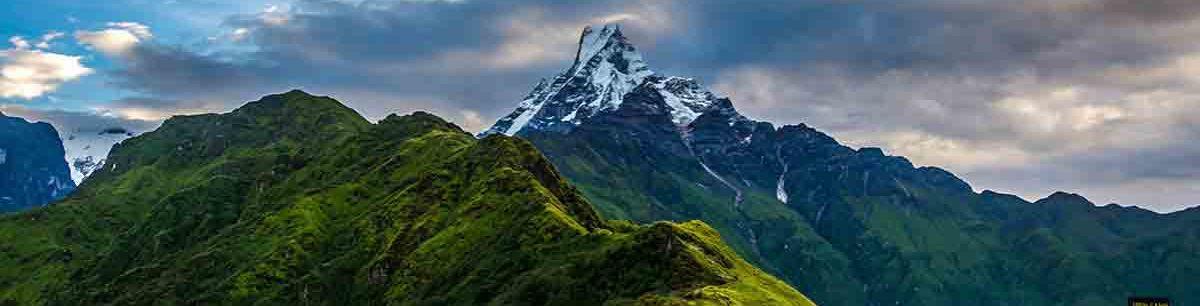
One of the most captivating experiences one may go on is climbing Chulu East Peak. At 6,584 meters above sea level, the peak provides breathtaking views of the Annapurna mountain range, including Manaslu (8163 meters), Dhaulagiri (8167 meters), and Tilicho (7134 meters), among many others. Chulu East Peak climbing requires knowledge and trekking experience as well as good physical condition and stamina because the majority of the climbing will be concerned with rope walk along the route, including the glacial passage. It is a mutual combination of trekking trails around the Annapurna massif, climbing the Marshyangdi valley, and passing the Thorong La (5,416m). With the assistance of our knowledgeable, experienced guide, climbers who are physically fit and have some mountaineering experience will be able to successfully summit this peak.
Chulu East Peak Climbing: Route
Similar to the Annapurna Circuit Trekking Trail, the route to Chulu East Peak Base Camp, 5334m, begins at Besi Sahar and follows the Marsyangdi river valley through a stunning range of terrain and culture. The subtropical lower valley, with its terraced farms and Gurung-inhabited villages, is where we begin. We leave the Annapurna Circuit Trail at Pisang and enter an unpopulated area. We then follow a ridge through pine forests, yak pastures, and mani walls toward the Chulu East Base Camp, which is situated in the moraines below the col in the ridge separating the East and Far East peaks. While we acclimate for two nights in base camp, the Sherpa team sets up a high camp (Camp I). We ascend from high camp to a broad glaciated ridge by scrambling across a difficult, steep moraine and soft snow. You must descend, traverse a cracked glacier, and then ascend steep scree slopes from the col on the glaciated ridge in order to reach the relatively simple but high mountain. We make an effort to photograph the breathtaking vista from Chulu East’s top before descending to Base Camp the same day.
Chulu East Peak Climbing: Best Season
The best seasons to climb Chulu East Peak are in the springtime, from March to May, and in the fall, from September to November (Autumn). But if you are well-equipped for the cold weather, climbing is also a terrific activity in the winter. The vistas of the mountains are crystal clear in December, when it is crisp and chilly, and there are less people in the area. You can choose to make the trip longer or shorter depending on your preferences.
Chulu East Peak Climbing: Altitude Sickness
Breathlessness, among other symptoms, headaches, exhaustion, poor appetite, and poor sleep are some of the early signs. These symptoms may emerge momentarily upon arrival at high elevations (over 3000 meters), but they typically go away after 1–2 days. The frequency of altitude sickness symptoms has much more to do with how quickly people ascend to high elevations than it does with their age or level of fitness. Our programs are meticulously designed to facilitate simple acclimatization. However, it is still feasible that some expedition participants would get so severe altitude sickness that the trip will ultimately have to be canceled.
Chulu East Peak Climbing: Experience and Fitness
Although our Everest Base Camp Trek route is more difficult than our Annapurna Base Camp Trek route, trekking in Nepal for the Dhaulagiri Circuit Trek does not require prior experience. Instead, our itinerary encourages walking comfortable distances. Trekking in the Himalayas constantly exposes us to high elevations and rocky terrain, necessitating appropriate rest and acclimatization to maintain their strength. We always have both accurately listed in our schedule. However, certain exercises like running, skipping, and other exercises will undoubtedly benefit you from the inside out.
Chulu East Peak Climbing: Difficulty
Despite being a moderate trip, climbing Chulu East Peak is not without its challenges. With roughly 23 miles of adventures from Pokhara, the trek is no walk in the park. It’s challenging to move along a zigzagged track and climb steep slopes. Focusing and maintaining endurance power requires a lot of energy, and the climate above base camp is frequently unpleasant and bitterly cold. The challenging aspect of raising altitude is the unpredictable variations in temperature. Bring warm clothing because the weather at and above the base camp is bitterly cold even in the fall.
Chulu East Peak Climbing: Accommodation
We have chosen 2 or 3 star hotels in the cities for your comfort and safety. The hotels can be upgraded to more deluxe ones per your request. All of the lodging as per the schedule is included in the package price. As some villages have a limited number of lodges, during the busiest times of the year, such as in the spring and fall, you might have to share a room with another trekker. A comfortable two-man tent with a mattress and a four-season sleeping bag will be provided for the climbing days. Our crew will try to set up camp in a picturesque location. All the hotel and camping accommodations are provided.
Chulu East Peak Climbing: Permits and Cost
During the spring season (March to May), the climbing permit for Chulu East costs $400 USD per person, however it only costs $200 USD during the fall season (September, October). And throughout the winter (December-February) and summer seasons, it only costs $100 USD if you are prepared for cold and harsh conditions (June to August). Additionally, you must deposit $500 USD as part of the waste deposit, which will be reimbursed once you’ve completed the necessary steps and climbed the required heights.
You must have the following items with you when ascending Chulu East peak.
Synthetic insulated paint
Shell jacket (which you can put on top of the down jacket while climbing)
Insulated snow pant
Thick climbing shocks
Mountaineering boot
Snow goggle
Climbing harness
Crampons
Ice ax
Belay device (black diamond ATC XP which is perfect for the progressive climber, excellent braking capabilities, and durable design)
One of the most stunning and beautiful mountains in the world is Ama Dablam (6812m). Ama Dablam, a gem of the Himalayan nation of Nepal, is also referred to as the “Matterhorn of the Himalayas” and is situated in the Everest region to the south of Mount Everest and Lhotse. Within just a few days of hiking to the typical Everest base camp as it separates from Tengboche, one can glimpse the lovely mountain. The third-highest permit that NMA has ever granted is for Ama Dablam. Whether you intend to climb Ama Dablam before or after a more difficult trek like Everest, doing so presents a climbing challenge in and of itself. Ama Dablam, often known as the mountaineer’s mountain, is a popular destination for mountaineers and alpinists.
Since Mount Ama Dablam is a technically challenging mountain to climb, an ascent requires a climber to be well prepared and experienced. Ama Dablam is a tall ice pyramid with angular ridges and nearly vertical walls. The South Western Ridge is the starting point for the ascent. The first successful ascent through this route took place in 1961. Three camps are typically established by the climbers either beneath or to the right of the hanging glacier. Comparatively speaking, getting to camp I is easier than going to the other camps, which progressively harder and harder. To successfully accomplish the challenging ascent to the summit, you must be completely knowledgeable in the techniques of rock and ice climbing.
An Ama Dablam Climb excursion is best planned for the autumn, between 10 October and 10 December. Due to the arrival of winter at this time, hard snow and rock are covered with ice snow. In comparison to autumn, spring has more snowfall from the middle of March until the end of May. You might anticipate snow and ice in the mountains after winter and with persistent spring showers. Breaking the track is undoubtedly more challenging in the Ama Dablam mountains due to the recent snowfall. The Ama Dablam can be climbed in the spring from the month of March to the end of May, however there will be more snow on the peak than in the fall. After a long winter and with persistent spring rains, the mountains are covered in ice, making it difficult to break the trail up the peak. Climbers should anticipate some weather-related disruptions during the summit window if they are heading to the summit in the spring.
The Southwest ridge of Mount Ama Dablam is the typical climbing route. To summit Mount Ama Dablam, the climbers must navigate challenging ice rocks and steep snow slopes while staying in three high camps. The climbers must navigate challenging saddle ridges to get to camp I from base camp. They then must turn to the north and ascend up via boulders and rocky terrain. From Camp I, one must cross a rocky bowl and proceed to Camp II by ascending a ridge using fixed lines. After this, the course consists mostly of steep, icy, and snowy passageways. It leads to the slope rise to the snow ground, continues via a narrow tunnel of steep snow and ice, and eventually goes to Camp III along the snow ridge. To the right of a massive hanging glacier, it is a difficult ascent on snow and ice from here to the top. Beautiful views of Mount Everest, Lhotse, Island Peak, Makalu, the Khumbu Himalaya, and other snow-covered summits may be seen from the summit of Mount Ama Dablam.
While breakfast is included in your hotel room in Kathmandu, all meals (breakfast, lunch, and supper) are provided throughout the trek. Potatoes, oats, buckwheat, Sherpa stew, and Tibetan bread are typical in mountainous areas. When the first seeds were introduced to the area in the early 1990s, Sherpas began cultivating potatoes. At higher altitudes, the selection of cuisine is limited, with the exception of several potato dishes. Carbohydrates, which are abundant in potatoes, are a great source of energy at altitude.
You must be capable of climbing and rappelling while wearing a pack and possess strong rock climbing and cramponing abilities. You will jumar using fixed ropes. On the beautiful ridge between Camps 1 and 3, there are several short, steep portions of nearly vertical ice and rock that call for strength and skill. Climbers must be prepared for extremely cold temperatures and wind up on Ama Dablam, so having the right kit is essential. You require solid common sense, as well as the capacity to learn and adapt. On Ama Dablam, climbers normally ascend and descend using fixed ropes rather than roping up to one another. This enables climbers to move together while also maintaining some independence between camps on the mountain.
For climbers participating in the Ama Dablam Climb trip, we provide twin-sharing hotel accommodations in Kathmandu. As there are no single rooms available in lodges, you must share a room with others while traveling to or from Lukla Base Camp. At Base Camp, a single tent with a thick mattress and pillow is provided for your use, but at Camp I and higher, you must share a tent with a member who will be warmer than you. At Base Camp, there will also be a separate bathroom and shower tent facilities.
Ama Dablam expedition Cost around $7,500. Mountain climbing is costly due to the numerous permits, equipment, and labor requirements. A Sherpa guide, a porter, meals, lodging, a flight, and a permit are all included in the price.
Ama Dablam Expedition costs around USD 7500 per person for Full Board Service.The cost of climbing Ama Dablam can vary greatly depending on the level of services and support you want during the expedition.
How hard is it to climb Ama Dablam?
Ama Dablam is considered a challenging mountain to climb, with a difficulty level that is higher than most other trekking peaks in the region. The climb requires a good level of physical fitness, endurance, and technical climbing skills. The following factors contribute to the difficulty of climbing Ama Dablam: 1. Altitude: The summit of Ama Dablam is at an altitude of 6,856 meters (22,493 ft), which presents a significant challenge for climbers who are not well acclimatized. The climb requires careful acclimatization and a gradual ascent to reduce the risk of altitude sickness. 2. Technical Climbing: The climb involves steep and exposed sections, including rock and ice climbing, that require a good level of technical proficiency. Climbers should have previous experience with technical climbing and be familiar with the use of ropes, anchors, and other equipment. 3. Weather: The weather in the region can be unpredictable and can change rapidly, making the climb more challenging and even dangerous. Strong winds, snowstorms, and low visibility can make the climbing conditions more difficult. 4. Logistics: The climb involves a long and challenging approach to the base camp, which can take several days of trekking through rugged terrain. The ascent also requires the use of multiple high-altitude camps, which adds to the complexity and difficulty of the climb.
In conclusion, climbing Ama Dablam requires a good level of physical fitness, technical proficiency, and experience with high-altitude climbing. It is important to be well prepared, both physically and mentally, for the challenges of the climb.
Can you see Everest from Ama Dablam?
Yes, it is possible to see Mount Everest from the summit of Ama Dablam. The two mountains are located in the same region of the Himalayas, and on a clear day, the view of Everest from the summit of Ama Dablam is said to be breathtaking. However, the view of Everest from Ama Dablam is subject to the weather conditions and can be impacted by clouds, fog, or other atmospheric conditions. It is best to have a clear day with good visibility to have the best chance of seeing Everest from Ama Dablam.
Is Ama Dablam higher than everest?
No, Mount Everest is higher than Ama Dablam. Mount Everest, the highest mountain peak in the world, stands at an elevation of 29,032 feet (8,848 meters) above sea level. Ama Dablam, on the other hand, is a peak in the Himalayas located in Nepal and has an elevation of 22,349 feet (6,812 meters) above sea level.
Can a beginner climb Ama Dablam?
Ama Dablam is considered a technically challenging mountain to climb, and is not typically recommended for beginner climbers. It requires a high level of mountaineering skills and experience, including proficiency in ice climbing, rock climbing, and alpine climbing. Climbing Ama Dablam also involves navigating exposed ridges and steep snow and ice slopes, and dealing with unpredictable weather conditions at high altitude. If you are a beginner climber, it is recommended that you start with smaller peaks and gradually work your way up to more challenging climbs. This will help you build your skills and experience, and prepare you for more difficult climbs like Ama Dablam in the future. It’s also important to remember that climbing any mountain, including Ama Dablam, is a serious undertaking that requires careful planning, preparation, and training. If you are interested in attempting this climb, I would recommend working with a professional guide and getting the necessary training, gear, and support to ensure a safe and successful ascent.
Can you climb Ama Dablam without a guide?
Climbing Ama Dablam without a guide is not recommended, as it is a technically challenging peak that requires a high level of mountaineering skills and experience. There are several sections of the climb that are exposed and difficult to navigate, and the unpredictable weather conditions at high altitude can add to the difficulty. In addition, climbing Ama Dablam also requires a climbing permit from the Nepalese government, which is only issued to organized groups, and solo climbers are not permitted. For these reasons, it is recommended that anyone attempting to climb Ama Dablam work with a professional guide who has the experience, training, and resources to ensure a safe and successful ascent. The guide can provide you with the necessary support, training, and equipment to help you tackle the technical challenges of the climb, and also help you navigate the permitting process.
What experience do you need for Ama Dablam?
Climbing Ama Dablam is a challenging and demanding undertaking that requires a high level of mountaineering skills and experience. Some of the specific experiences and skills that are necessary for climbing Ama Dablam include: 1. Technical climbing skills: Ama Dablam requires proficiency in ice climbing, rock climbing, and alpine climbing, as well as the ability to use crampons, ice axes, and other technical climbing gear. 2. Altitude experience: Ama Dablam is located in the high altitude environment of the Himalayas, and climbers will need to be able to acclimatize and deal with the physical and mental challenges associated with climbing at high elevation. 3. Navigation and route-finding: The climb requires the ability to navigate exposed ridges and steep snow and ice slopes, and to find the best route to the summit. 4. Expedition experience: Ama Dablam is a multi-day climb that requires good physical fitness, as well as the ability to camp, carry gear, and deal with the demands of a prolonged high-altitude expedition. 5. Strong team skills: If you are climbing with a partner or a group, strong teamwork skills are essential to ensure a safe and successful ascent.
It’s important to note that climbing Ama Dablam is a serious undertaking, and anyone considering the climb should have extensive mountaineering experience and a high level of physical fitness. If you are new to mountaineering, it is recommended that you start with smaller peaks and gradually work your way up to more challenging climbs, to build your skills and experience.
Has Ama Dablam been climbed?
Yes, Ama Dablam has been climbed. Ama Dablam is a popular peak in the Himalayas located in Nepal and is considered one of the most beautiful mountains in the world due to its distinct peak shape. The first successful ascent of Ama Dablam was made by Mike Gill and Mike Ryan in 1961, and since then, the mountain has been climbed by many other climbers from around the world.
ama dablam height
Ama Dablam is a peak in the Himalayas located in Nepal and has an elevation of 22,349 feet (6,812 meters) above sea level.
ama dablam meaning
“Ama Dablam” is a Sherpa name that translates to “Mother’s necklace.” The name is thought to come from the long ridges on either side of the peak that resemble the arms of a mother embracing her child, while the hanging glacier at the bottom of the peak resembles a necklace. In Sherpa culture, the mountain is considered sacred and is revered as a powerful symbol of the protective embrace of a mother. The climb to the summit of Ama Dablam is considered a rite of passage for many experienced mountaineers, and the mountain continues to be one of the most popular climbing destinations in the Himalayas.
ama dablam location
Ama Dablam is located in the eastern region of Nepal, in the Solu-Khumbu district of the Sagarmatha Zone. It is situated near Mount Everest and is part of the Himalayan mountain range. The mountain lies approximately 28 km southeast of Mount Everest and can be reached from the town of Namche Bazaar, which is the starting point for many climbing expeditions in the region.
Mount Thorong (6,144 meters) Climbing is one of the most well-liked and fruitful adventure programs available. The Annapurna area hosts the straightforward-to-climb Thorong peak. It’s not true to claim that you require prior mountain climbing experience in order to climb Thorong Peak. For this exciting journey, you must be emotionally and physically prepared. You must be physically fit enough to climb Thorong Peak and be driven by a desire to experience some of the most breathtaking mountain views in Nepal’s Annapurna region. Along with reaching 6144 meters, you will gain first-hand knowledge of the beautiful Gurung people that live in this isolated area. They have a distinctive architectural style, live in remote settlements, practice Buddhism, and hold fervent spiritual convictions. The route will lead you past rhododendron forests that stand out sharply from the surrounding foliage with their red, white, and pink blossoms. The national flower of Nepal is the rhododendron. The location of Thorong Peak lies south of Thorong La Pass (5146m).
Your excursion starts at Bhulbhule (840m), then gradually climbs through a number of towns until you reach Thorong La Pass and Thorong Peak. At the foot of the Thorong La Pass in the Mustang District, in the holy Vishnu Muktinath Temple, which is revered by both Buddhists and Hindus, you will pay a visit. One of the tallest temples in the world, Muktinath is renowned for its 108 water fountains that are shaped like bulls. Before ending in Pokhara, the trip traverses the Kali Gandaki River Valley, passing through the towns of Jomsom (2743 meters above sea level, on the banks of the river), Marpha (1630 meters), Tukuche, and Tatopani.
Thorong Peak Climbing: Fitness and Experience
We advise engaging in physical activities like running, swimming, and some minor climbs to lower peaks that include climbs requiring the use of crampons for your own safety and success. Be competent of carrying about 30lbs/15 kg and be prepared for intense exposure and sharp drop-offs. Get some training in technical rock and mountaineering climbing if you can to get ready for your trek and ascent of Island Peak. Know how to use various climbing tools like ropes, crampons, and jumar ascenders.
Thorong Peak Climbing: Best Season
From March through May and from October through November, you can go Thorong Peak Climbing. The two seasons represented by these months are spring and autumn. These months are the busiest for trekking because of the consistent weather, moderate climate, and clear skies. On the trail, you will come across a lot of other hikers. The climbers need to be mindful of the technical difficulties that may arise. And prior to the excursion, they must be properly outfitted with the necessary climbing equipment. Additionally, in order to improve your safety and happiness, it is crucial to select a seasoned expedition organizing business that can offer you a qualified climbing guide who is authorized by the government.
Thorong Peak Climbing: Difficulty
It is somewhat difficult to climb Thorong Peak since you not only require previous hiking or climbing experience, but you also need to be in excellent physical condition. Numerous steep sections of the trail may be found from Thorong High Camp to Thorong Base Camp and beyond. You must also navigate some tough sections, and your guide will need to help you well to get to the peak. The terrain is challenging, so you’ll need good health, endurance, and resolve.
Thorong Peak Climbing: Accommodation
In the villages, teahouses will serve as the primary lodging, whereas you spend the night in camp when climbing. Locals run teahouses, which support them financially. The teahouse has very modest amenities, making it appear more like sharing a room in a local’s home than a hotel. You must share a bed with another trekker since the accommodations feature twin beds. Most of the time, restrooms may be present. We will bring all the tents and supplies you need to live throughout a time of climbing.
Thorong Peak Climbing: Required Permits and Cost
The cost of a permit can change depending on the time of year. The permit can become a little pricey as spring approaches, Nepal’s busiest climbing season. The list of fees for climbing Thorong Peak is below:
A stunning peak with high soaring lines on every aspect, Cholatse (6,440 m), also known as Jobo Lhaptshan, is nestled between the Khumbu and Gokyo Valleys in Nepal’s Everest region. It is one of the Everest region’s challenging trekking peaks. The Nepali Mountaineering Association designated it as a peak of the group A climbing classification. Climbers who are planning a technical challenge between 6000 and 64000 meters above sea level should join this adventure. Route for grades WI2+ M3-4 A1-2. You can consider yourself qualified for the Cholatse trip if you have scaled Ama Dablam or other technical peaks throughout the globe at D+/-, 5.9/5.10 grade levels. This adventure is intended for experienced climbers, not beginners.
Although hikers and climbers prefer the Khumbu region, this area around the Gokyo region receives the fewest visits, and at the location of Cholatse/Taboche peak, there are hardly any people to be seen. Consider climbing this a secret gem in the Khumbu region. Flights from Kathmandu to Lukla, Phakding, Namche Bazaar, Dole, Machhermo, and Gokyo—one of the highest communities in Nepal and the world—mark the beginning of your expedition. In order to speed up the process, we will spend a day at Gokyo acclimatizing before ascending Gokyo Ri (4750m). After reaching Thangna (4650 meters), Cholatse Base Camp (5355 meters), and taking another day to recuperate and acclimate, we continue on to Camp I and finally Camp II. The big day has arrived, when we will climb to the top and then descend to Camp 1 or Base Camp. (In the unlikely event that the weather is unsuitable for climbing, we have a day to spare.) After leaving Base Camp, we go to Photse before returning to Namche Bazaar (3446 meters), where we catch a picturesque flight back to Kathmandu.
Cholatse Peak Climbing: Required Equipment
You will share some of the cluster’s equipment while carrying all of your own. It’s crucial to keep your pack light, so pick lightweight gear and clothing. Make sure you have a variety of weather-appropriate gear on hand. Layering your clothes may be necessary if the weather changes suddenly. Your needs can be met by three layers. Avoid cotton and materials that lose heat in cold weather. Comfortable, long-lasting wool (or other tested textiles) that breathe and wick away perspiration makes for an even more enjoyable experience! ‘ Free water and a windproof duffle will be provided, and porters will carry it on the journey for you. Once the trek is over, you can retain the duffel. You can leave your bag and other non-trekking necessities at our office in Katmandu and pick them up when you arrive back.
Cholatse Peak Climbing: Accommodation
The accomodation for the Cholatse Peak Climbing Trek will be in simple tea houses for boarding and lodging. The most popular way to trek to Cholatse Peak (6,440 m) Climbing is to simply walk from one teahouse to another. In rural villages, teahouses are essentially small hotels that serve both home-cooked meals and a place to sleep. Usually, there are 2 trekkers sharing a room. In the Cholatse Peak Climbing Trek, bathrooms are also communal, and the lodges typically have running cold water and western-style toilets. Additionally, a hot shower is provided, although it requires an additional fee. There may be an additional fee to get a private accommodation in some of the trek’s communities.
Cholatse Peak Climbing: Best Season
The two climbing seasons are the optimum times to climb Cholatse (6,440 m). Autumn and Spring (Late March through May) (September – November). There aren’t as many climbers on Everest during either season as there are on other summits. Climbers should prepare for a small number of climbers. Winter climbing is still an option for skilled climbers, but there are many risks involved. i.e. unsteady circumstances, tea houses may not be open or even those that are may not be well-stocked. Pre-arrangements must be made; however, the amount of climbers will also impact this.
Cholatse Peak Climbing: Cost
The number of the group, the standard of the hotel, and the amenities you want on the mountain will all have an impact on how much the trip will cost. For your initial ascent, you must pay Cholatse Expeditions $8399. All ground transportation, meals, hotel, round-trip flights from Kathmandu to Lukla, sleeping bags, down jackets, climbing permits for Cholatse Peak, and the majority of the climbing gear, including boots, helmets, crampons, harnesses, and ascenders, are included. Before attempting to climb Cholatse Peak, we strongly encourage you to finish your studies because it is no joke and your life cannot be measured in money. Never economize by taking short cuts.
The schedule may be changed after agreement between the agency and the client. The client may decide to add or remove additional activities before processing the trip. Price reductions for fewer activities may be conceivable, and with everyone’s cooperation, new activities may be added.
How challenging is the climb to the Cholatse expedition?
Extreme fitness is expected of climbers. The true expedition starts the day climbers move from base camp to high camps. High altitudes often make breathing difficult, but with the right pre-trip acclimatization, good nutrition, and adequate hydration, your body should adjust and recover. The first significant challenge is after negotiating the icefall and tackling a steep 45–60-degree headwall on the mountain’s west col. We established camp 1 in the constrained spaces of the granite slab just above the ice headwall. From camp 1 to camp 2, the most challenging part of the entire journey, is located. Numerous various climbing techniques on vulnerable, exposed, loose rocky parts. Once you have passed the rocky stage of the climb, you will have another 500 meters of vertical ascent up the knife-edge ridge, which involves navigating crevasses, ice walls, and uneven terrain. Before arriving to Camp1, there is no suitable spot to rest. On this day, you can anticipate a protracted, tiresome ascent. Depending on your climbing skills, you can expect to climb for 8+ hours to reach camp 2. Although the distance from Camp 2 to the summit is just approximately 250 meters, it requires intense concentration to ascend along a ridge with a 1000 meter drop on either side. On this day, you should plan to climb for at least 10 hours because you must reach the top before returning to camp 1. You will get through this final day with the help of all your prior physical preparation, willpower, mental toughness, and tenacity for true adventure.
The Himlung is located in the Manaslu region, northeast of the Annapurna range, not far from the Tibetan border. The area was opened by the Nepali government in 1992. The expedition for Himlung Himal (7126M) travels to Koto through the Annapurna Circuit and then proceeds toward Nar-Phu Gaon from Koto. The road travels by lofty peaks, steep passes, isolated settlements, slender gullies, forests, rocks, springs, Gompas, and distinctive cultural sites. Few tourists have traveled to the area because it is undeveloped and secluded.
The height of himlung himal is 7126M
You circumnavigate the Annapurna route on the way to Himlung. After that, this path will lead you to some charming towns like Koto and Na-phu Gaun. The route from Naphu Gaun to Manang has just recently been made accessible to tourists. Because of this, you will travel by stunning high peaks and passes on your journey. Glaciers, springs, woods, and hospitable people are some of the other great gifts of nature that can be found along the road. Any summit over 7000 meters takes a high level of fitness to climb. Climbing the Himlung Himal is hence not recommended for those with less training. To climb the Himlung Himal in Nepal, you must have a level of fitness that is above ordinary.
Mountain range: Himlung is part of the Himalayan mountain range.
Scenery: The summit of Himlung offers breathtaking views of the surrounding mountain range.
Adventure: Himlung is a popular destination for experienced climbers who seek adventure and a challenge.
Conservation: The area surrounding Himlung is protected by the Manaslu Conservation Area, which aims to preserve the natural and cultural heritage of the region.
Trekking route: The base camp of Himlung can be reached via the popular trekking route to Manaslu.
Himlung Peak Expedition: Difficulty
Any mountain exceeding 6000 meters in height will require a high level of fitness to climb. However, this mountain’s ascent is not as challenging as ascents to peaks higher than 8000 meters, such as Everest or Annapurna. However, it will benefit you greatly if you prepare as though you were going on the 8000-meter trek. Since this is an expedition rather than a hike, you will need to become familiar with the fundamentals of mountaineering. You must also account for the additional equipment you will need to bring on your excursion, such as a stove and ropes. This means that in order to complete the adventure, you must become exceptionally fit.
Himlung Peak Climbing: Acute Mountain Sickness
Increasing altitude causes acute mountain sickness, which can be fatal if untreated in a timely manner. The most frequent Himlung Himal expedition obstacle is this one. Because there is less air pressure and oxygen in high altitudes, altitude sickness results in breathing problems. As oxygen levels fall with each ascent on the trails, it has an impact on your health. You may have symptoms including a headache, nausea, vomiting, trouble sleeping, trouble moving about, shortness of breath, and many others. Inform your guide or a nearby partner right once if you have any of the aforementioned symptoms.
Himlung Peak Climbing: Weather and Temperature
Another Himlung Himal Difficulty to take into account is the weather, which can change frequently. While moving upward, the weather is still erratic. Every 100 meters of elevation gain results in a 0.60 degree drop in air temperature. The weather is in the negatives by the time you get to Camp III. Both the day and night will be warm, with frigid temperatures in between.
Himlung Peak Climbing: Best Time
In Nepal, the season for expeditions starts in March or April. The expedition to Himlung Himal should be over now. This is a result of the relatively chilly weather. As a result, expeditionists can acquire adequate footing in the snow since the snow doesn’t melt. The autumn season, which is between October and November, is another popular time of year for this adventure. The weather in these two months is comparable to that in March and April. This indicates that the chances of successfully completing the mission are highest during these two seasons.
Himlung Peak Expedition: Accommodation
Up to the Himlung Base Camp, which is the lower point of the excursion, the meals and accommodation are as ordinary as they can be. The food provided will be the same as what you would find on other Nepali hiking routes. This contains the customary Dal Bhat from Nepal. Pizza and other continental and Chinese dishes are occasionally available. However, you won’t find such amenities above the Himlung Base Camp. Food will need to be prepared on a carry-around burner. When you leave Himlung Base Camp and travel to the high altitude areas, you will also need to erect tents.
Himlung Peak Climbing: Trekking Route
On this journey, you first drive for 7 hours to Bulbule, after which you begin hiking to Jagat the following day. From there, you travel to Dharapani and Koto. You travel to Meta and begin your trek to Phu after spending the previous night relaxing. Your trek to Himlung Base Camp, the expedition’s high point, is the last step. Tents and other supplies are used to make this your camp. You have roughly 14 days to acclimatize, get ready for the climb, reach the peak, and go back to the base. You stay in the area for a further four days after that before making your way back to Kathmandu.
Himlung Peak Climbing: Cost
The size of the group, the level of hotel accommodations, and the amenities you desire in the mountain will all affect the cost of the trip. You will have to pay $9500 to Himlung Expeditions for your first ascent. The majority of the climbing equipment, such as boots, helmets, crampons, harnesses, and ascenders, as well as all ground transportation, food, lodging, and round-trip flights from Kathmandu to Lukla are included, as are sleeping bags, down jackets, climbing permits for Himlung Peak, and sleeping bags and down jackets. We strongly advise you to finish your homework before attempting to climb Himlung Peak since it is no joke and your life cannot be valued in money. Never cut corners to save a few dollars.
Following an agreement between the agency and the customer, the itinerary may be modified. Before processing the trip, additional activities may be added or removed at the client’s choice. Price reductions for fewer activities may be possible, and additional activities may be introduced with mutual consent.
Himlung Peak Expedition FAQs:
Himlung himal height
The height of Himlung Himal is 7,126 meters (23,386 feet) above sea level.
Himlung Himal weather
The weather on Himlung Himal can be unpredictable and extreme, with low temperatures, high winds, and heavy snowfall. During the climbing season, which typically takes place from April to June and from September to November, temperatures can range from -20°C (-4°F) to -30°C (-22°F) at higher elevations. Strong winds and snowstorms are common, making it difficult for climbers to reach the summit. Due to the unpredictable nature of the weather, it is important for climbers to be well-prepared and equipped with the proper gear and clothing.
Himlung Peak Climbing cost
The cost of climbing Himlung Peak can vary depending on several factors, including the length of the trip, the number of people in the group, the level of support required, and the choice of equipment and supplies. On average, a typical Himlung Peak climbing expedition can cost anywhere from $7,500 to $10,000 or more. The cost typically includes transportation to and from the base camp, food and lodging while on the mountain, equipment rental, a guide and support staff, and park and permit fees. However, it is important to note that the cost can vary greatly depending on the level of luxury and support desired, as well as the specific services included.
Himlung Himal Difficulty
Himlung Himal is considered a challenging peak to climb, requiring technical mountaineering skills and experience. The ascent to the summit involves steep snow and ice slopes, as well as navigating crevasses and other hazards. The remote location of Himlung and the unpredictable weather conditions in the region make it a demanding climb that should only be attempted by experienced and well-prepared mountaineers. In addition to the physical and technical challenges, climbers must also be prepared for the altitude and the effects of high altitude sickness. Acclimatization is important, as the climb to the summit of Himlung takes place at elevations above 6,000 meters (19,685 feet). Overall, climbing Himlung Himal is not for the faint of heart, and should only be attempted by those with the necessary skills, experience, and physical fitness. However, for those who are up to the challenge, the experience of climbing Himlung and the breathtaking views from the summit are truly unforgettable.
Himlung himal Base Camp
The base camp of Himlung Himal is situated at an elevation of approximately 5,450m meters above sea level. It is typically reached through a trekking route in the Manaslu region of Nepal, which takes several days and passes through remote villages and stunning mountain scenery. The base camp serves as a starting point for the ascent to the summit of Himlung Himal and is equipped with basic amenities for climbers, such as tents and cooking equipment. Climbers use the base camp to acclimatize to the altitude, prepare for the climb, and receive support from guides and porters. The base camp provides a unique and remote experience for adventurers and mountaineers, but it can also be harsh and challenging due to the high altitude and challenging weather conditions.