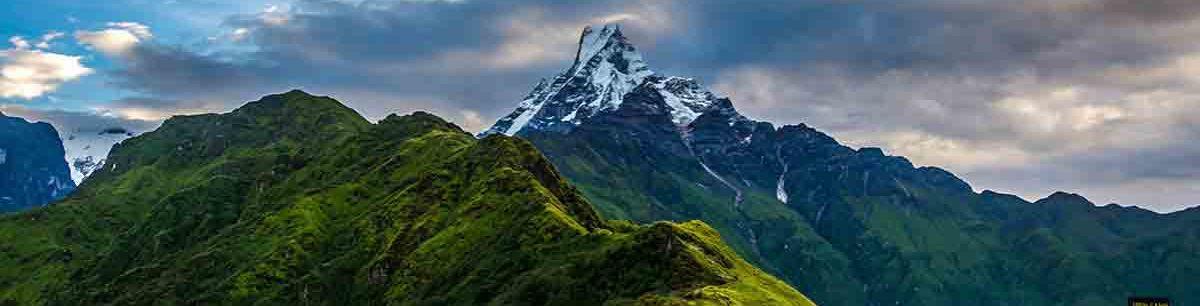
Himlung Peak Expedition

Rating: 5 out of 5.

The Himlung is located in the Manaslu region, northeast of the Annapurna range, not far from the Tibetan border. The area was opened by the Nepali government in 1992. The expedition for Himlung Himal (7126M) travels to Koto through the Annapurna Circuit and then proceeds toward Nar-Phu Gaon from Koto. The road travels by lofty peaks, steep passes, isolated settlements, slender gullies, forests, rocks, springs, Gompas, and distinctive cultural sites. Few tourists have traveled to the area because it is undeveloped and secluded.

The height of himlung himal is 7126M

You circumnavigate the Annapurna route on the way to Himlung. After that, this path will lead you to some charming towns like Koto and Na-phu Gaun. The route from Naphu Gaun to Manang has just recently been made accessible to tourists. Because of this, you will travel by stunning high peaks and passes on your journey. Glaciers, springs, woods, and hospitable people are some of the other great gifts of nature that can be found along the road. Any summit over 7000 meters takes a high level of fitness to climb. Climbing the Himlung Himal is hence not recommended for those with less training. To climb the Himlung Himal in Nepal, you must have a level of fitness that is above ordinary.

Himlung Himal facts:

Here are some facts about Himlung Himal:

  1. Elevation: 7,126 meters (23,386 feet) above sea level.
  2. Location: Located in the Manaslu region of Nepal.
  3. First ascent: The first successful ascent of Himlung was made by a Japanese team in 1992.
  4. Difficulty: Himlung is considered a challenging ascent due to its remote location and difficult route to the summit.
  5. Technical skills: Climbing Himlung requires technical mountaineering skills.
  6. Mountain range: Himlung is part of the Himalayan mountain range.
  7. Scenery: The summit of Himlung offers breathtaking views of the surrounding mountain range.
  8. Adventure: Himlung is a popular destination for experienced climbers who seek adventure and a challenge.
  9. Conservation: The area surrounding Himlung is protected by the Manaslu Conservation Area, which aims to preserve the natural and cultural heritage of the region.
  10. Trekking route: The base camp of Himlung can be reached via the popular trekking route to Manaslu.

Himlung Peak Expedition: Difficulty

Any mountain exceeding 6000 meters in height will require a high level of fitness to climb. However, this mountain’s ascent is not as challenging as ascents to peaks higher than 8000 meters, such as Everest or Annapurna. However, it will benefit you greatly if you prepare as though you were going on the 8000-meter trek. Since this is an expedition rather than a hike, you will need to become familiar with the fundamentals of mountaineering. You must also account for the additional equipment you will need to bring on your excursion, such as a stove and ropes. This means that in order to complete the adventure, you must become exceptionally fit.

Himlung Peak Climbing: Acute Mountain Sickness

Increasing altitude causes acute mountain sickness, which can be fatal if untreated in a timely manner. The most frequent Himlung Himal expedition obstacle is this one. Because there is less air pressure and oxygen in high altitudes, altitude sickness results in breathing problems. As oxygen levels fall with each ascent on the trails, it has an impact on your health. You may have symptoms including a headache, nausea, vomiting, trouble sleeping, trouble moving about, shortness of breath, and many others. Inform your guide or a nearby partner right once if you have any of the aforementioned symptoms.

Himlung Peak Climbing: Weather and Temperature

Another Himlung Himal Difficulty to take into account is the weather, which can change frequently. While moving upward, the weather is still erratic. Every 100 meters of elevation gain results in a 0.60 degree drop in air temperature. The weather is in the negatives by the time you get to Camp III. Both the day and night will be warm, with frigid temperatures in between.

Himlung Peak Climbing: Best Time

In Nepal, the season for expeditions starts in March or April. The expedition to Himlung Himal should be over now. This is a result of the relatively chilly weather. As a result, expeditionists can acquire adequate footing in the snow since the snow doesn’t melt. The autumn season, which is between October and November, is another popular time of year for this adventure. The weather in these two months is comparable to that in March and April. This indicates that the chances of successfully completing the mission are highest during these two seasons.

Himlung Peak Expedition: Accommodation

Up to the Himlung Base Camp, which is the lower point of the excursion, the meals and accommodation are as ordinary as they can be. The food provided will be the same as what you would find on other Nepali hiking routes. This contains the customary Dal Bhat from Nepal. Pizza and other continental and Chinese dishes are occasionally available. However, you won’t find such amenities above the Himlung Base Camp. Food will need to be prepared on a carry-around burner. When you leave Himlung Base Camp and travel to the high altitude areas, you will also need to erect tents.

Himlung Peak Climbing: Trekking Route

On this journey, you first drive for 7 hours to Bulbule, after which you begin hiking to Jagat the following day. From there, you travel to Dharapani and Koto. You travel to Meta and begin your trek to Phu after spending the previous night relaxing. Your trek to Himlung Base Camp, the expedition’s high point, is the last step. Tents and other supplies are used to make this your camp. You have roughly 14 days to acclimatize, get ready for the climb, reach the peak, and go back to the base. You stay in the area for a further four days after that before making your way back to Kathmandu.

Himlung Peak Climbing: Cost

The size of the group, the level of hotel accommodations, and the amenities you desire in the mountain will all affect the cost of the trip. You will have to pay $9500 to Himlung Expeditions for your first ascent. The majority of the climbing equipment, such as boots, helmets, crampons, harnesses, and ascenders, as well as all ground transportation, food, lodging, and round-trip flights from Kathmandu to Lukla are included, as are sleeping bags, down jackets, climbing permits for Himlung Peak, and sleeping bags and down jackets. We strongly advise you to finish your homework before attempting to climb Himlung Peak since it is no joke and your life cannot be valued in money. Never cut corners to save a few dollars.

Following an agreement between the agency and the customer, the itinerary may be modified. Before processing the trip, additional activities may be added or removed at the client’s choice. Price reductions for fewer activities may be possible, and additional activities may be introduced with mutual consent.

Himlung Peak Expedition FAQs:

Himlung himal height

The height of Himlung Himal is 7,126 meters (23,386 feet) above sea level.

Himlung Himal weather

The weather on Himlung Himal can be unpredictable and extreme, with low temperatures, high winds, and heavy snowfall. During the climbing season, which typically takes place from April to June and from September to November, temperatures can range from -20°C (-4°F) to -30°C (-22°F) at higher elevations. Strong winds and snowstorms are common, making it difficult for climbers to reach the summit. Due to the unpredictable nature of the weather, it is important for climbers to be well-prepared and equipped with the proper gear and clothing.

Himlung Peak Climbing cost

The cost of climbing Himlung Peak can vary depending on several factors, including the length of the trip, the number of people in the group, the level of support required, and the choice of equipment and supplies. On average, a typical Himlung Peak climbing expedition can cost anywhere from $7,500 to $10,000 or more.
The cost typically includes transportation to and from the base camp, food and lodging while on the mountain, equipment rental, a guide and support staff, and park and permit fees. However, it is important to note that the cost can vary greatly depending on the level of luxury and support desired, as well as the specific services included.

Himlung Himal Difficulty

Himlung Himal is considered a challenging peak to climb, requiring technical mountaineering skills and experience. The ascent to the summit involves steep snow and ice slopes, as well as navigating crevasses and other hazards. The remote location of Himlung and the unpredictable weather conditions in the region make it a demanding climb that should only be attempted by experienced and well-prepared mountaineers.
In addition to the physical and technical challenges, climbers must also be prepared for the altitude and the effects of high altitude sickness. Acclimatization is important, as the climb to the summit of Himlung takes place at elevations above 6,000 meters (19,685 feet).
Overall, climbing Himlung Himal is not for the faint of heart, and should only be attempted by those with the necessary skills, experience, and physical fitness. However, for those who are up to the challenge, the experience of climbing Himlung and the breathtaking views from the summit are truly unforgettable.

Himlung himal Base Camp

The base camp of Himlung Himal is situated at an elevation of approximately 5,450m meters above sea level. It is typically reached through a trekking route in the Manaslu region of Nepal, which takes several days and passes through remote villages and stunning mountain scenery. The base camp serves as a starting point for the ascent to the summit of Himlung Himal and is equipped with basic amenities for climbers, such as tents and cooking equipment. Climbers use the base camp to acclimatize to the altitude, prepare for the climb, and receive support from guides and porters. The base camp provides a unique and remote experience for adventurers and mountaineers, but it can also be harsh and challenging due to the high altitude and challenging weather conditions.

Feel Free To contact Us.

Pikey Peak Trek- Everything you need to know

Rating: 5 out of 5.

Pikey Peak Trek, a recently advertised fantastic trek in the lower Everest region, may be your best option if you’re looking for a less-traveled but still excellent trekking experience in Nepal. Located in the Khumbu region near Katmandu, this is a wonderful (less-traveled) route. This quick Pikey trip offers the chance to visit a number of Buddhist temples and monuments, including stupas and gompas. Any path you choose to take to Pikey Peak Trek will provide stunning views of the Numbur Himal, Mt. Everest, and other high peaks.

The view of the lower Everest region from Pikey Peak, according to Sir Edmund Hillary, is the best in all of Nepal. We tend to agree. The advantage of this little hike is that it’s a little further away from the tall mountains, thus vistas of the Himalaya are much more expansive. In just eight days, you may take in the beauty, learn about Sherpa culture, and tour Kathmandu. You can see the majestic mountain peaks of Dhaulagiri, Everest, Makalu, and Kanchenjunga in the far west from Pikey Peak. The tea house lodging along the trekking path is straightforward and provides only the most basic amenities. Anyone who wants to see the Himalayan peaks and an authentic native way of life in a short period of time can consider the Pikey Peak Trek.

Pikey Peak Trek: How to Get There?

You can get there in three different ways. 1) A 30-minute flight from Kathmandu to Phaplu is the first leg of this Pikey Peak trip. 2) From Kathmandu to Dhap or Salleri, take a private or shared local jeep, which typically takes 8 to 10 hours, depending on traffic and road conditions. 3) After reaching Bhandar, continue on the traditional Jiri Everest Base Camp Trekking path to Pikey Peak via Namkheli and Gola.

Pikey Peak Trek: Best Season

The ideal season for the Pikey Peak Trek is from September to December in the fall and from February to June in the spring. These times of year are renowned for their fantastic weather and stunning scenery. Since Nepal’s biggest celebration falls during this season, autumn in Nepal is a happy time of year. Similar to the spring, which brings joy as a variety of flowers grow over the entire nation. In Nepal, the monsoon season brings a lot of rain, raising the risk of a landslide and a flood. Leeches will also encroach you throughout the forest trail, and the trail will be slick. But given that the entire walking track would be covered in lush foliage, this time of year may be ideal for enthusiastic botanists.

Pikey Peak Trek: Cost

Most people that journey to this area have this question on their minds; certainly, the cost depends on your trip method. The cost of the trekking package varies depending on your mode of transportation, but is typically between USD 850 and USD 990 for a 7-day program based on two individuals sharing. The normal pricing for our services is USD 999 per person, which includes local group transportation.

If you prefer a soothing stroll, there will be an additional fee of:

Flight from Phaplu is USD 154 per person, and the return is also the same The group paid USD 230 for a private jeep, and the same amount for the return trip. 

Pikey Peak Trek: Physical Requirement/ Difficulty

Even if it’s just for a single excursion, it’s not enough to show up at Pikey Peak with your supplies and guidebook.Although Pikey Peak is 4065 meters high, with proper acclimatization, it does not pose the same risks of altitude sickness.In order to reach the height and distance, you must be both physically and mentally prepared.Jogging, running, swimming, and leg workouts would all be ideal physical preparation for the hike a few weeks prior.It would be beneficial to read the Pikey Peak guide and have a map for the Pikey Peak Trek.If you have never hiked before, it is advised that you arrange your trip through a reputable trekking company in Nepal.

Pikey Peak Trek: Permits

Apparently, there are no permits needed for this trip. Simply buy tickets for a bus or an airline to Phaplu to start your journey. You save $50 because there aren’t any major national parks or conservation areas along the trekking track (the typical entry fee for other trekking journeys that include courses that go through national parks or conservation areas). But some of the spectacular fauna can be found in the lower Everest highlands. The entire route of the trail runs along the Sunkoshi river’s bank. Along the way, the path passes through extensive rhododendron trees. These produce a stunning shade of vivid red and yellow, which is nicely portrayed in photographs. The walking route passes through moss-covered fields that are home to a variety of Himalayan birds and animals as it travels through dense pine, maple, chestnut, and hazy forest.

Pikey Peak Trek: Accommodation

Twin-sharing rooms are available in the majority of tea houses. If you are traveling alone, you can have a private room if the guest home is not fully booked. Otherwise, you can share the room with your travel companion. Additionally, if there are additional hikers, you can share a room with them. The tea houses include a communal dining room where breakfast, lunch, and dinner are served. Your camera can also be charged. spend time speaking with other hikers or charge your phone. Teahouses offer lodging, meals, as well as laundry and hot shower amenities. Services like WiFi, boiled water for drinking, hot baths, and laundry will cost you extra.

Pikey Peak Trek: Acclimatization and Altitude Sickness

You can reach the Everest mountain ranges via the Pikey Peak Trek. Your trek’s highest point rises to a height of around 3800 meters above sea level. Below 3000m, the trip is not arduous, but above that, the low oxygen levels can occasionally make breathing difficult. It is always preferable to give your body some time to adjust to the thin air while you are at a high altitude. You must hike gradually and carefully, and you must keep your body hydrated. It is more likely that you will experience AMS, or acute altitude sickness, if you are moving quickly to get to your destination. At elevations exceeding 2000 meters, AMS symptoms such as headache, nausea, exhaustion, shortness of breath, and dizziness are common. For mild cases, taking Diamox and getting a good night’s sleep may work. Drinking lots of liquids will help to keep the illness under control. Examples of these fluids are water, tea, soup, and others. To prevent the condition from getting worse, one should take the required precautions. However, if the symptoms get worse, you might need to descend to a lower level and get care. In the worst-case scenario, an air evacuation will be planned, in which the patient will be transported to Kathmandu for medical treatment. If left untreated or disregarded, AMS can be fatal.

Feel Free To Contact Us.

Best Place to enjoy the view of Mount Everest

Rating: 5 out of 5.

Of course, you want to see Mount Everest from the greatest angles while you’re in the Everest region. Whether you choose to hike the Gokyo Lakes and/or Three Passes as an addition to the Everest Base Camp journey. Although the Everest Base Camp journey is well-known, you might be shocked to learn that it does not offer the best views of the mountain. From many vantage points in the Khumbu region, which may be explored during the Mount Everest view trek, one can see the best Everest View. Here are some of the best vantage sites and directions for getting there.

Namche Bazaar Rest Area: Phakding:

This is your first (and last) opportunity to see Mount Everest throughout your trek, albeit it is unquestionably not the best vantage point. You will encounter a resting platform near the end of the journey from Phadking to Namche Bazaar (typically day 2 of the EBC route). You may first see Everest through the trees at this location. On the final day of your trek, as you make your way back to Lukla, you will also pass this same platform.

Kala Patthar, Everest Region:

The highest viewpoint in Nepal is still Kala Patthar (5,164m), often referred to as Kala Pattar or Kalapatar. The vista from there is the closest one can get to Mount Everest without having to use severe mountaineering techniques. As it takes at least 12 days to travel round trip from Lukla Airport to Kala Patthar on the trail that also leads to Everest Base Camp, getting there on foot requires a significant time commitment. As an alternative, you can fly in a helicopter from Kathmandu or even Lukla.

Pikey Peak:

Even further away and so providing a more comprehensive picture of Everest and the surrounding mountains is Pikey Peak (4,065m). This perspective was deemed the best in Nepal by Edmund Hillary, a member of the original Mt. Everest ascent crew. In addition to Everest, you can see the 8,000-meter mountains Dhaulagiri and Kanchenjunga in the distance. A highly suggested off-the-beaten-path excursion in the lower Everest Region is a six-day trek to Pikey Peak. Pikey Peak is also accessible by mountain bike.

Gokyo RI:

Gokyo Ri, a rocky summit at 5,357 meters above sea level, provides a slightly different and further out perspective of Everest than its more well-known twin Kala Patthar. The views of Everest are also magnificent, and some people think they’re even better than the ones from Kala Patthar because it’s possible to see more of the mountains in the area, including three more 8,000-meter peaks: Lhotse, Makalu, and Cho Oyu. From Lukla, a trek to Gokyo Ri through Namche Bazaar and Gokyo Lakes takes roughly 14 days total.

Chola Pass:

Another top Mount Everest vantage point that will leave you breathless is Cho La. The elevation of this mountain pass is 5,420 meters above sea level. One of the toughest climbs in the Everest region, Cho La pass requires some mountaineering expertise. But the challenging climb is worthwhile for the captivating view at the top. A wave from the vibrant prayer flags will welcome you as you ascend Cho La Pass. The stunning panoramic vista that will be all around you will stay with you. You can see Makalu, Cho Oyu, and Mount Lhotse in addition to the magnificent Everest. From the summit of Cho La Pass, one can see Mount Everest in all its clarity and stunning beauty.

Hotel Everest View:

One of the nicest panoramic views of the Himalayas in the Everest region can be seen from Hotel Everest View. One of the highest altitude luxury hotels in the world is Hotel Everest View, which is situated at 3,962m on the ridge above Namche Bazaar. This opulent hotel is a highly appreciated vantage point for Everest Base Camp trekkers. Take a seat on the balcony and prepare your favorite beverage as you enjoy the view of the majestic mountains rising above the clouds. The magnificent views of Mt. Everest (8,848m), Nuptse (7,861m), Lhotse (8,516m), Ama Dablam (6,812m), Baruntse (7,129m), Island Peak (6,160m), and Thamserku (6,623m). are visible from Hotel Everest View.

Renjo-La Pass:

Renjo-la Pass offers you a fantastic perspective of Mount Everest and is thus still considered to be one of the most challenging yet rewarding treks that attracts the attention of a significant portion of trekkers in the area. Its route includes rough trails with surrounding beautiful green Himalayan woods and is elevated to a height of about 5360 meters. With its trail highlighting Namche, Thame, and Gokyo Sherpa villages, you will get the best chance to see the Gokyo Lakes. On the way, the Sagarmatha (Everest) National Park is a great place to see a variety of plants and animals. Awe-inspiring vistas of Everest, Cho Oyo, Lhotse, Ama Dablam, Makalu, and other majestic mountains are the main draws, and they may be enjoyed by all mountain climbers along the way.

Tengboche Village:

Another well-known lookout point is Tengboche, which is 3,867 meters above Namche Bazaar on a ridge. The largest Buddhist monastery in the Khumbu region is located in Tengboche, surrounded by a spiritual and cultural atmosphere. As a result, it provides you with an amazing perspective of Ama Dablam and the Everest Mountains. From Lukla, it takes 5 to 7 days to finish the entire journey through the Namche Bazaar region. Tengboche’s advantageous location at around 3867 meters above sea level, where you can easily explore Namche to the best of your ability, continues to be well-liked for another reason: it is recognized as the capital of Nepal’s economy.

Kongde Farak Ri:

Even though we’ve listed a ton of locations with the best mountain views, KongdeFarak Ri is actually the best spot to see the entire Everest region. The beautiful Everest is visible here, lying parallel to your eyes. The best memory you can have for a lifetime may be this close encounter with the tallest mountain in the world. One of the underrated and least traveled perspectives still to be found is this one. About nine hours of hiking separate Namche Bazaar from KongdeFarak Ri. As the 360-degree vista of the Himalayas amuses you like nowhere else, a sensation of heaven fills your eyes and heart. The Khumbu valleys provide views of the surrounding scenery and geographical area in addition to the mountains.

Feel Free To Contact Us.

Parchamo Peak Climbing

Rating: 5 out of 5.

The “Rolwaling,” a lonely, solitary high valley west of the Khumhu and not far from the Tibetan border, is referred to by the local Sherpas as simply “the cemetery” because of its placement nestled between angular snow-capped peaks. Many enigmatic tales have likely been told about this valley, where the fabled and well-known Yeti is said to have his home. The Everest region’s Parchamo peak (6273m/20575ft), which marks the boundary with the Rolwaling valley hiking region to the west, is located at the head of Thame Valley. Dennis Davis and Phil Boultbee were the first to conquer Parchamo Peak Trek’s sleek and simple snowy peak in 1955. They were participants in Alf Gregory’s incredibly successful Merseyside Himalayan Expedition.

There are two ways to visit this peak: first, by walking to the Rolwaling valley and Tashilapcha pass (west to east); second, by traveling from Namche bazaar to the Thame valley and high camp (east to west). The trip is shorter coming from the Namche bazaar side than coming from Rolwaling. The peak offers pretty difficult climbing as one of the highest in the category of trekking peaks. This beautiful valley has managed to avoid being damaged by the devouring onslaught of trekkers due to a number of circumstances. Because there aren’t always accommodations available, you’ll find that getting there is typically difficult and that you should come prepared with full logistical support.

Parchamo Peak Climbing: Route Details

As we ascend glaciers, we reach a different potential campsite, but it is not advised to set up the high camp due to potential rock falling. We continue climbing north-east of the Tasi Lapcha icefall and arrive just below the rock walls where we fix high camp at (5500m). From the high camp, we gain the ridge of peak raised from the glaciers of Tasi Lapcha Pass. We traverse to the west and arrive at the bottom of the snow slopes, and the peak is visible. The mountain’s top gives breathtaking views of Tengi Ragi Tau, Cho Oyu, Ama Dablam, Thamserku, Kusum Kanguru, and more. Occasionally, crevasses can make climbing Parchamo peak more difficult. Due to Parchamo’s exposed snow slopes to strong winds, climbing it in December will be windier.

Parchamo Peak Climbing: Permits

The restricted area (Rowaling Region) of Nepal contains Parchamo Peak. To trek in this area, you must to secure some licenses from the Nepali government. The entry permits required for Parchamo Peak trekking and climbing are;

  • Gaurishankar Conservation Area Permit: NPR 3,000 for foreigners, NPR 1,000 for SAARC members, and NPR 100 for citizens of Nepal
  • Rowaling Valley Restricted Area Permit, TIMS Card, Special Permit: For foreigners, a guided trip costs NPR 1000, a solo trek costs NPR 2000, and a SAARC journey costs NPR 300.
  • A foreigner’s NMA Parchamo Peak Climbing Permit costs $250 throughout the spring (March–May). Fall (Sept-Nov): $125. Off-Season (Jun- Aug, Dec- Feb): $70.
  • Spring (March–May): $250 for SAARC nations. Fall (Sept-Nov): $125. Off-Season (Jun- Aug, Dec- Feb): $70.
  • For citizens of Nepal: Spring (March–May)–4,000 NPR.NPR 2,000, autumn (Sep-Nov). NPR 1,000 throughout the off-season (Jun- Aug, Dec- Feb).
  • Foreigner Entrance Permit for Khumbu Pasang Lhamu Rural Municipality: NPR 2,000 per person (For the First 4 Weeks). NPR 2,500 per individual (beyond 4 weeks). NPR 2,000 per person (during the first 4 weeks) and NPR 2,500 per person for citizens of Nepal and SAARC nations (beyond 4 weeks)
  • Foreigner Sagarmatha National Park Permit: NPR 3,000 per person, per entry, plus 13% VAT (about 34$).
  • For SAARC countries: NPR 1,500 per person, per entry, plus a 15% VAT fee
  • For citizens of Nepal, the price is NPR 1,500 per person, per admission, plus a 15% VAT fee.

Parchamo Peak Climbing: Difficulty

The Parchamo Peak Climb Difficulty level more closely resembles the difficulties brought on by the peak’s route and elevation of 6,273 meters. Technically speaking, this peak climbing is incredibly difficult because of the height we are aiming for and the difficult trails that go there. The Parchamo Peak Climb takes some technical expertise because it has certain technical elements that will undoubtedly provide obstacles, but what matters most is your physical and mental stamina to handle them.

Parchamo Peak Climbing: Best Season

The difficulty of reaching the top of Parchamo Peak is real, and it can bring you immense glory and pride because it’s no easy feat. Planning, preparation, and thoughtful structuring of such plans are necessary. Therefore, we must take into account the Best Parchamo Peak Climbing Seasons in order to improve the likelihood of a magnificent Parchamo Peak Climb. The best times to climb this breathtaking peak are in the spring and the fall. You won’t experience the additional difficulties of Pachermo Peak Climb in Rolwaling Valley weather, such as intense rain or bitter cold, during these seasons.

Parchamo Peak Climbing: Accommodation

Before and after the trek, lodging in Kathmandu will be arranged on a twin-sharing basis under a BB plan, with the exception of an additional fee for a single supplement (based on room availability). Standard teahouses and lodges with unheated rooms, wooden beds, and foam mattresses will be available for travelers’ lodging along the walk. The participants will have to share restroom and laundry facilities. For a fee, independent groups can arrange rooms with attached bathrooms in some trekking locations. Requests for this kind of arrangement must be submitted at least four months before the trip’s departure date.

Parchmo Peak Climbing: Guide and Staff Arrangements

All of your activities will be managed by our skilled and knowledgeable team throughout the walk. They will conduct the entire escorting. We will supply you with a highly qualified and experienced guide who speaks fluent English, has good navigational skills, and has the technique of rope-fixing skills because this is one of the trickiest and hardest treks. They will travel with you from Kathmandu and serve as your guides while you ascend Parchamo Peak. A porter for two trekkers (2*15kg = 30kg) and an assistant guide will be assigned to each group of four to five hikers. You will be charged for two people even though you only need one porter if your luggage weighs more than 15 kilograms.

Feel Free To Contact Us.

Indra Jatra in Kathmandu

Rating: 5 out of 5.

One of the most thrilling and revered celebrations of the Newar community of the Kathmandu Valley is the eight-day long Indra Jatra festival, which takes place in September. This also heralds the start of the month-long autumn festival season. A wooden pole constructed of pine is first built at Basantapur Square in front of the former Hanuman Dhoka Palace.Hundreds of onlookers assemble in the Palace Square and on the nearby temples for the pole-raising event.Through Kathmandu’s main streets, the chariot of Kumari, the Living Goddess, is paraded.Nearly every evening, masked dancers known as Lakhay perform in the streets to the accompaniment of loud drums.The celebration honors the day when Indra descended from heaven in human form to search for a herb.

During Indra Jatra, oil wicks are used to illuminate the shrines and historic palace structures near Kathmandu Durbar Square. On the platform in front of the Living Goddess temple, a performance symbolizing Lord Vishnu’s ten terrestrial incarnations is performed every night. At Indra Chowk, the enormous representation of Akash Bhairab’s head is placed on public display in front of his temple. Ecstatic crowds congregate near Hanuman Dhoka Palace in the afternoon of the day before the full moon to see the long-awaited Living Goddess’ chariot procession and catch a glimpse of the revered young Newar girl who has been deified as Kumari, or Goddess Taleju, in person. People congregate in the tiny alleyways of the old Kathmandu to witness and pay reverence as the chariot of the Kumari is pulled by two other, smaller chariots pulling a representative of Ganesh and Bhairav. The lowering of the (lingam) pole holding Indra’s flag during religious rituals marks the conclusion of the Indra Jatra celebration.

Tracing the history of the festival

The origin stories of Indra Jatra, the largest celebration in the Valley, are as varied as the civilizations that make up that region. There are several widely acknowledged theories about how Indra Jatra came to be, each with its own significance and logical underpinnings. But the most typical and widely believed narrative is that Lord Indra personally visited Nepal Mandala (the old name of Kathmandu Valley). Indra is thought to have traveled in quest of parijat, a flower that his mother Vasundhara required in order to perform a puja. He was caught collecting flowers from a garden in Maru tole while assuming human shape, which prompted the locals to arrest him and parade him in the middle of the town while he was chained.

This particular story is acted out during the entire festival. Later, Indra was saved by his mother, who assured the locals that, in exchange for Indra, their farms would receive enough dew in the upcoming winters. Even throughout the Vedic era, Indra Jatra was present. The Natyashastra, a Sanskrit scripture written between 200 BCE and 200 CE, also mentions the celebration of Indra Jatra and the raising of Ya Sin, a pole that is raised on Bhadra Shukla Dwadashi to signal the start of the festival. The tradition of Lakhey and Pulu Kishi Pyakhan (dancing) at the Jatra was also said to have begun during the reign of Gunakama Deva in the 10th century, when Indra Jatra is thought to have first been celebrated. Gunakamadeva, according to Subarna Shakya, also constructed 12 statues of Bhairav, with the Akash Bhairav in the center, which helped to demarcate Kathmandu’s territory at the time and start the custom of Bhairav worship during Indra Jatra.

The importance of the festival

Alok Siddhi Tuladhar, a heritage conservation activist, contends that while many scholars and priests generally accept the religious tales of Indra’s arrival in Nepal Mandala, which led to the celebration of Indra Jatra, the festival actually has a deeper meaning attached to the culture and traditions of Newa society—worshiping nature and ancestors. Bhaktapur also celebrates Indra Jatra for eight days, however it is not as well-known as Kathmandu’s jatra. It has its own special customs and practices, some of which include the idea of keeping a bukhyacha, or scarecrow, in various locations. Since scarecrows have been used in fields since ancient times, the use of scarecrow figurines lends credence to the theory that Newa society, which was originally agrarian, celebrated the festival to mark the change of season and emphasize the significance and value of fertile land.

Following the rise of Hinduism in the nation, Indra became associated with the celebration. Gautama Vajracharya, a Sanskritist, art historian, and scholar, concurs with the theory that Indra Jatra has been celebrated since before the advent of Hinduism and describes it as a festival that originated to honor nature and ancestors. However, the festival also has a strong connection to the culture of worshipping nature. Before coming into contact with Sanskrit-speaking people and their literature, the Newars had no concept of deity. According to Vajracharya in Nepalese Seasons: Rain and Rituals, “They regarded their ancestors as magical creatures, therefore they united the name Indra with aju, ancestor/grandfather, to make Indra aju, grandfather Indra,” explaining why Newa people refer to Indra as Indra aju.

How do we observe Indra Jatra?

The event opens with the construction of The Linga (Yasingh), a ceremonial pole, in the style of a carnival, and is followed by a unique presentation of the deity Akash Bhairab, who is symbolized by a huge mask spewing Jaad and raksi (Nepali local liquors). At this time of year, households all around Kathmandu (particularly Newar households) display sculptures and statues of Indra and Bhairab. The Linga (Yasingh), a timber pole measuring 36 feet long, was carefully selected from the Nala forest in the Kavre district, east of Kathmandu. Tradition has it that Lord Vishnu had given this flag to Indra as protection. On order to express gratitude to Indra, the rain deity, the Kumari (living goddess) finally departs from the solitude of her temple in a palanquin and leads a parade through the streets of Kathmandu. The parade of chariots and masked dancers portraying gods and devils is the festival’s principal draw. Yanya is the Newari name for Indra. Hanuman Dhoka’s Bahirab statue, which is amazing to look at, is dripping with jaad (local Nepalese liquor).

In the procession are:

Majipa Lakhey, Pulukishi, Sawan Bhaku, Ganesh (chariot), Kumar (chariot), and Kumari(Chariot)

In addition to these, the city’s open stages host a variety of dances known as dabu. As well as other local deities, Swet Bhairava is on display.

Feel free To Contact Us.