
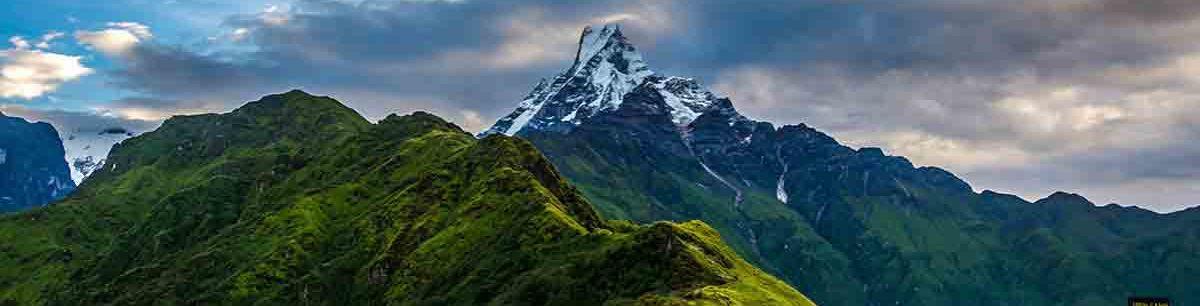

The Kailash Mansarovar Yatra has entered an unprecedented period of uncertainty following the catastrophic flash flood that struck Nepal’s Rasuwa district on August 26, 2026. The disaster severely damaged the infrastructure around Rasuwagadhi, one of the principal gateways between Nepal and China’s Tibet Autonomous Region, disrupting the overland corridor used by thousands of pilgrims traveling toward Mount Kailash and Lake Mansarovar.
For pilgrims who were preparing to undertake the Yatra in the coming weeks, the situation has created difficult questions: Will the route reopen? How long could reconstruction take? Can the journey be redirected through another route? What happens to existing permits and bookings? Should travelers postpone their plans or continue preparing?
At present, there is no responsible way to give a definite reopening date.
The immediate priority remains rescue, recovery and restoration of essential infrastructure in the disaster-affected areas. The flood has not merely damaged a road. It has affected bridges, border facilities, hydropower infrastructure, communication networks and other critical infrastructure along the Rasuwa corridor. Reports from August 30 described the traditionally dependable Rasuwa–Kerung corridor as severely compromised, with the main gateway to China destroyed and alternative approaches themselves vulnerable to landslides, flooding and difficult mountain weather.
For prospective pilgrims, therefore, the right approach is neither panic nor unrealistic optimism. The Kailash Mansarovar Yatra has not disappeared, but the Nepal–Kerung route has entered a major recovery phase, and travelers need to plan around uncertainty.
What Happened to the Kailash Mansarovar Route?
The disaster occurred in the Rasuwa region near Nepal’s northern border with Tibet. A catastrophic flash flood and debris flow swept through areas including Rasuwagadhi, Timure and Syabrubesi, destroying or seriously damaging infrastructure along the Bhote Koshi corridor.
The event was associated with a major glacial/rockfall-related collapse in the Himalayan region. The resulting surge of water, mud and debris traveled rapidly through the mountain valleys, producing destruction on a scale that has affected communities as well as strategic transportation infrastructure.
This is particularly significant for Kailash pilgrims because Rasuwagadhi is not an ordinary local road crossing.
It is an important gateway for travelers moving from Nepal into Tibet toward Kerung, Saga, Lake Mansarovar and Mount Kailash. The traditional overland itinerary begins in Kathmandu and travels north toward the Nepal-China border before entering Tibet and continuing across the Tibetan plateau.
Consequently, damage at the Nepal side of the border can stop an entire pilgrimage itinerary even if the roads and facilities farther inside Tibet remain usable.
That is exactly what has happened.
Reports published immediately after the disaster indicated that hundreds of Kailash-bound pilgrims and other travelers became stranded or uncontactable in the affected region. Nearly 400 pilgrims were initially reported out of contact around Rasuwagadhi, illustrating just how directly the disaster struck the pilgrimage corridor.
Why Is Rasuwagadhi So Important for Kailash Pilgrims?
The importance of Rasuwagadhi becomes clearer when we look at how the Nepal-based Kailash Mansarovar Yatra operates.
A typical overland journey from Nepal follows a broad sequence:
Kathmandu → Syabrubesi/Rasuwagadhi → Kerung → Saga → Lake Mansarovar → Darchen → Kailash Parikrama
The exact itinerary varies according to the operator, transportation arrangements, acclimatization schedule and Chinese/Tibetan authorities’ requirements.
Once pilgrims cross into Tibet, they continue through the high-altitude Tibetan plateau toward the Kailash region. The journey is therefore dependent on a chain of transportation and administrative checkpoints.
If the first major international border gateway cannot function, the rest of the itinerary cannot proceed normally.
This is why travelers should not assume that the availability of accommodation in Tibet or the operational status of Mount Kailash itself means the Yatra can immediately resume from Nepal.
The bottleneck is the access corridor.
This Is More Than a Temporary Road Closure
One of the most important things prospective pilgrims need to understand is that the present situation should not be treated like an ordinary monsoon landslide that can be cleared in several days.
The August 26 disaster caused extensive destruction in an area already characterized by steep terrain, unstable slopes and difficult Himalayan geography. Infrastructure around the border was badly affected, while communication and transportation systems were disrupted.
The Rasuwa–Kerung corridor has been described as severely damaged, with the main gateway destroyed and alternative routes also exposed to weather and geological hazards.
At the same time, Nepal’s authorities are still dealing with an enormous humanitarian emergency. Rescue operations remain underway at multiple hydropower facilities, where hundreds of workers have been reported missing or feared trapped.
This matters for pilgrims because reconstruction cannot reasonably become the government’s first priority while lives are still at risk.
The sequence is likely to be:
Rescue → recovery → assessment → debris removal → temporary access → infrastructure reconstruction → border restoration → safety testing → controlled reopening
Only after these stages can travel operators realistically know whether regular pilgrimage traffic can resume.
So, When Will the Kailash Mansarovar Yatra Resume?
The honest answer is:
Nobody can responsibly provide a confirmed reopening date yet.
Anyone promising that the Rasuwa–Kerung route will definitely reopen on a particular date without official confirmation should be treated cautiously.
Mountain infrastructure reconstruction is unpredictable, particularly after a disaster involving bridges, roads, river channels and border facilities.
A temporary track may be established relatively quickly, but that does not automatically mean it is safe for large groups of pilgrims, buses and support vehicles.
Authorities will need to evaluate:
- Road stability
- Bridges and culverts
- River conditions
- Landslide-prone slopes
- Border infrastructure
- Immigration facilities
- Communication systems
- Emergency evacuation capability
- Availability of fuel and supplies
- Medical and rescue access
- Chinese-side road conditions
- Weather forecasts
- Additional flood or landslide risks
For a normal tourist trip, some of these issues might be manageable.
For a high-altitude pilgrimage involving elderly travelers, large groups and long stretches of remote terrain, the safety threshold must be much higher.
Therefore, “the road is open” and “the Kailash Yatra is safely operational” are not necessarily the same thing.
What About the Other Kailash Mansarovar Routes?
This is where the situation becomes particularly complicated.
There are other ways of reaching the Kailash region. However, travelers should not assume that every geographical route is a universally available alternative.
For Indian pilgrims, the Government of India has historically organized official Kailash Mansarovar pilgrimage routes through Uttarakhand and Sikkim, subject to government procedures and eligibility requirements.
The Indian Embassy in Kathmandu also distinguishes between routes such as Simikot/Hilsa and Rasuwagadhi for pilgrims traveling through Nepal and advises pilgrims to verify that the appropriate Nepal Restricted Area Permit and Chinese/Tibet travel documentation have been obtained.
This creates a crucial distinction.
The alternative route may exist geographically—but that does not mean every pilgrim can simply switch to it.
For many international travelers, the Nepal route has a major administrative advantage because the journey is arranged through Nepal-based operators using the appropriate Chinese group visa and Tibet travel permits.
Travel information for the 2026 season describes the China Group Visa as part of the documentation process for pilgrims entering Tibet through Nepal.
The Indian government routes are different.
They are government-managed pilgrimage mechanisms rather than a simple substitute for a privately organized Nepal-based Kailash trip.
Therefore, a traveler should not hear “there is another route” and immediately assume:
“I can just fly somewhere else and continue my existing Kailash itinerary.”
That may not be legally, administratively or operationally possible.
The Visa Issue Is Extremely Important
This is one of the biggest misunderstandings travelers may have during the current disruption.
Mount Kailash and Lake Mansarovar are located in Tibet, China. Reaching them requires authorization to enter Tibet and travel within the permitted areas.
For pilgrims using the Nepal route, the visa and permit process is generally handled as a coordinated group arrangement rather than simply obtaining an ordinary tourist visa and driving to Tibet.
Travel information for the 2026 season indicates that pilgrims traveling via Nepal require the appropriate Chinese group visa and Tibet travel authorization.
This means travelers should not cancel their documentation or attempt to independently change countries and border crossings without speaking to their authorized Kailash operator and checking the latest government requirements.
The legal route available to one nationality may not be available to another.
Likewise, a route available to Indian citizens through a government pilgrimage program should not automatically be presented as an option for American, Canadian, European, Australian, Nepalese or other foreign passport holders.
What Should Travelers With Existing Bookings Do?
If you have already booked a Kailash Mansarovar Yatra through Nepal, the best approach right now is to remain in contact with your operator and avoid making irreversible decisions based solely on social media reports.
Ask your operator for a written update covering five important areas.
Is Your Departure Date Still Being Held?
Ask whether your planned departure date remains active or has been placed on hold.
Do not assume that a booking has automatically been cancelled.
What Has Happened to Your Permits?
Ask whether your Chinese group visa, Tibet travel permit, Nepal permits and other documentation have already been processed.
Different documents have different validity periods and administrative implications.
What Is the Operator’s Contingency Plan?
A professional operator should be able to explain what happens if:
- The border remains closed
- The road opens only partially
- The Yatra is delayed
- The group must be rescheduled
- Permits need to be reissued
- Accommodation needs to be changed
- Transportation needs to be rearranged
What Is the Cancellation or Transfer Policy?
Before paying additional money, understand whether your booking can be:
- Postponed
- Transferred to a later departure
- Partially refunded
- Fully refunded
- Converted into a future-season booking
Policies will vary between operators.
Who Is Responsible for Additional Costs?
If the journey is postponed, determine whether additional expenses for hotels, permits, transportation or flights will be borne by the traveler or included in the operator’s contingency arrangements.
Getting these answers before the next payment deadline can prevent serious disputes later.
What Should Travelers Planning a Future Yatra Do?
If your journey is scheduled for later in 2026 or for 2027, there is no reason to abandon your dream of visiting Kailash at this stage.
Instead, change your planning strategy.
Keep Your Documents Ready
Ensure your passport has sufficient validity and that your personal documents are current.
Keep digital and physical copies of:
- Passport
- Passport photographs
- Previous visas
- Travel insurance
- Medical documentation where required
- Emergency contacts
- Booking confirmation
- Payment receipts
However, do not submit or pay for time-sensitive permits blindly. Ask your operator whether processing should proceed or be temporarily delayed.
Do Not Rush to Rebook Through an Unverified Alternative
The uncertainty surrounding the Nepal route will inevitably create opportunities for misinformation.
You may see claims such as:
- “The route is reopening tomorrow.”
- “A new shortcut has been approved.”
- “Foreigners can enter Tibet through another border immediately.”
- “Your existing visa can be transferred automatically.”
- “Helicopters will replace the entire route.”
- “The disaster is over, so the Yatra is normal again.”
Do not make expensive decisions based on such claims.
A legitimate alternative must satisfy three conditions:
Physical access + legal authorization + operational approval
All three are necessary.
Could Helicopters Solve the Problem?
Helicopter or air-assisted arrangements may eventually become part of a contingency strategy for some sections of the journey, but travelers should be cautious about treating helicopters as a complete replacement for the damaged overland corridor.
The Kailash pilgrimage involves international border procedures, permits, transportation inside Tibet, acclimatization and movement across a vast high-altitude region.
A helicopter may help overcome one damaged road segment.
It does not automatically solve the entire logistical chain.
Any helicopter-based alternative should therefore be considered only when officially authorized and operationally confirmed.
What Will Determine the Reopening?
Several factors will ultimately determine when pilgrims can safely return to the Nepal–Kerung route.
1. Reconstruction of Rasuwagadhi
The border gateway needs to be restored to a functional condition.
2. Restoration of Road Connectivity
Vehicles need reliable access from Kathmandu and surrounding areas to the border.
3. Bridge and River-Crossing Safety
A temporary road is insufficient if bridges cannot safely carry tourist buses and heavy vehicles.
4. Chinese-Side Connectivity
The Nepal side is only half of the journey.
The road toward Gyirong/Kerung and onward into Tibet must also be operational.
China has separately been working to restore infrastructure around the Gyirong Port area following the disaster.
5. Border and Immigration Operations
Even if the physical road is restored, the crossing cannot function as a tourism gateway until immigration, customs and other border facilities are operational.
6. Tibet Travel Permits
The relevant Tibetan authorities must be willing and able to process pilgrimage groups.
7. Safety Assessment
Perhaps most importantly, authorities must determine that the corridor is sufficiently stable for travelers.
This final step could take longer than clearing the road itself.
Could the Nepal Route Reopen in Phases?
Yes, that is a possibility worth watching.
Instead of immediately returning to normal large-scale pilgrimage traffic, authorities could potentially move through stages such as:
Stage 1: Emergency and rescue traffic
Stage 2: Essential supplies and reconstruction teams
Step 3: Controlled local transportation
Stage 4: Limited border movement
Step 5: Commercial transportation
Stage 6: Controlled tourism
Stage 7: Regular Kailash pilgrimage operations
However, this is a potential framework—not an announced reopening plan.
Travelers should wait for official confirmation before treating any such scenario as fact.
What Does This Mean for the 2026 Kailash Season?
The timing is particularly unfortunate because the Kailash pilgrimage season is already underway during the summer and early autumn months.
The Nepal route had been experiencing substantial demand. In 2026, China reportedly set a quota of 24,000 Indian pilgrims traveling to Kailash Mansarovar via Nepal, demonstrating the scale of pilgrimage activity expected through this corridor.
The disaster therefore affects not only individual pilgrims but an entire ecosystem of:
- Travel agencies
- Guides
- Hotels
- Transport companies
- Border communities
- Porters
- Helicopter operators
- Restaurants
- Local suppliers
- Pilgrimage organizers
The consequences could continue well beyond the immediate emergency.
Should You Cancel Your Kailash Dream?
No. But you should postpone certainty.
That is probably the most sensible advice at this moment.
Mount Kailash will remain where it has always been.
The spiritual significance of the Yatra has not changed.
What has changed is the infrastructure used to reach it.
Instead of asking only:
“Will the Yatra happen?”
travelers should ask:
“Under what conditions can the Yatra safely and legally happen?”
That is a much better question.
The pilgrimage should resume only when the route is physically safe, the border is operational, the required permits are valid and authorities have approved the movement of pilgrims.
A Practical Plan for Travelers
For anyone currently preparing for Kailash Mansarovar, the following approach is recommended.
If Your Trip Is in the Next Few Weeks
Do not travel toward Rasuwa unless your operator and the relevant authorities have confirmed that your itinerary is operational.
Do not independently attempt to reach the border.
If You Have Already Paid
Ask for a written confirmation of:
- Current booking status
- Permit status
- Visa status
- Rescheduling options
- Refund policy
- Alternative arrangements
- Additional cost responsibilities
If Your Trip Is in 2027
Continue preparing.
The present disaster does not mean the Nepal route will remain closed indefinitely. In fact, the reconstruction period may ultimately lead to stronger infrastructure, improved early-warning systems and better disaster preparedness.
But do not finalize non-refundable arrangements too early.
If You Are an International Pilgrim
Pay particular attention to visa and Tibet permit requirements.
Do not assume that an Indian government-organized route or another border crossing is automatically available to your nationality.
Your passport, visa category, Tibet permit and route authorization all matter.
The Future May Require a More Resilient Kailash Route
The disaster has also exposed a larger issue.
The Himalayas are becoming increasingly vulnerable to extreme weather, glacier instability, landslides and sudden floods. Nepal is already discussing stronger cooperation and data-sharing mechanisms with China after the catastrophe, including improved monitoring and early-warning capabilities for glacial hazards.
This could eventually influence how pilgrimage routes are managed.
Future Kailash travel may involve:
- Better early-warning systems
- More robust bridges
- Improved emergency communication
- More carefully designated evacuation points
- Stronger cross-border disaster coordination
- More resilient road construction
- Better weather monitoring
- Stricter temporary closures during high-risk conditions
For pilgrims, these changes may mean additional procedures—but they could also make the journey considerably safer.
What Travelers Should Watch From Now On
Instead of relying on rumors, monitor information from several levels:
Nepal authorities: for road, border and disaster updates.
Chinese/Tibetan authorities: for Kerung/Gyirong border and Tibet travel permissions.
Indian authorities: particularly for Indian citizens considering government-organized routes.
Your licensed Kailash operator: for group visa, permit and itinerary information.
Airlines and transportation providers: if your Kathmandu arrangements need to be changed.
Most importantly, ask your operator to distinguish between “route physically accessible,” “border operational,” and “Kailash pilgrimage officially permitted.”
Those are three different milestones.
Final Thoughts: Patience Is Part of the Yatra
For thousands of people, visiting Mount Kailash and Lake Mansarovar is not simply another holiday. It is a deeply meaningful pilgrimage that may have been planned for months or even years.
The August 26 disaster has therefore created tremendous disappointment and uncertainty.
But travelers should remember that the present disruption is a consequence of an extraordinary natural disaster, not the end of the Kailash Mansarovar Yatra through Nepal.
At the moment, the responsible position is to accept that the Rasuwagadhi–Kerung route has suffered major damage and that no reliable reopening date can yet be promised. The scale of destruction means that rebuilding and safety assessment will take time.
Alternative routes exist, but they are not universally interchangeable. Government-organized Indian routes have their own eligibility and administrative systems, while pilgrims traveling through Nepal rely on a different combination of Chinese visa, Tibet permit and Nepal-side arrangements.
Therefore, the best thing a pilgrim can do right now is prepare without rushing, communicate with a reputable operator, protect your financial and travel documents, avoid unverified alternative-route claims, and wait for official confirmation before committing to a new itinerary.
The mountains will still be there.
The journey may take longer than expected.
And for a pilgrimage as important as Kailash Mansarovar, waiting for the right route to become safe is far better than rushing toward an uncertain one.
